
Exploring Muskoka Lake: A Resident’s Guide to Ontario’s Premier Waterfront in 2026
Owning a piece of Muskoka Lake is less about simple possession and more about a lifelong partnership with the water itself. While the granite shores and towering pines offer a sense of timeless peace, any seasoned resident knows that the lake is a dynamic force that requires constant, expert stewardship. You likely moved here for the quiet mornings on the dock, but you might now find yourself worrying about how the winter ice will treat your footings or whether the spring water levels will crest your shoreline.
It’s natural to feel a bit overwhelmed by the complexities of local building codes in Gravenhurst or the structural demands of the Canadian Shield. This guide is designed to bridge that gap, offering you a deep dive into the geographical and historical nuances that define this region. By understanding the unique characteristics of the area, you’ll gain the clarity needed to make informed decisions about your property. We will walk through the essential environmental factors, current 2026 water management protocols, and the meticulous craftsmanship required to ensure your boathouse or deck remains a legacy for your family for generations to come.
Key Takeaways
- Learn how the heritage of the “Steamship Era” continues to influence the unique boathouse culture and architectural style found across Muskoka Lake today.
- Understand the distinct environmental personalities of the three major lakes and how the lock system at Port Carling facilitates navigation between them.
- Discover the physical realities of winter ice pressure and how professional water level management helps protect your shoreline structures from seasonal damage.
- Navigate the essential permit processes for Gravenhurst and Port Carling to ensure your waterfront project meets modern structural and environmental standards.
- Gain clarity on choosing the right dock foundation, whether steel pile, crib, or floating, to maximize the longevity and value of your property investment.
Understanding the Geography and Heritage of Lake Muskoka
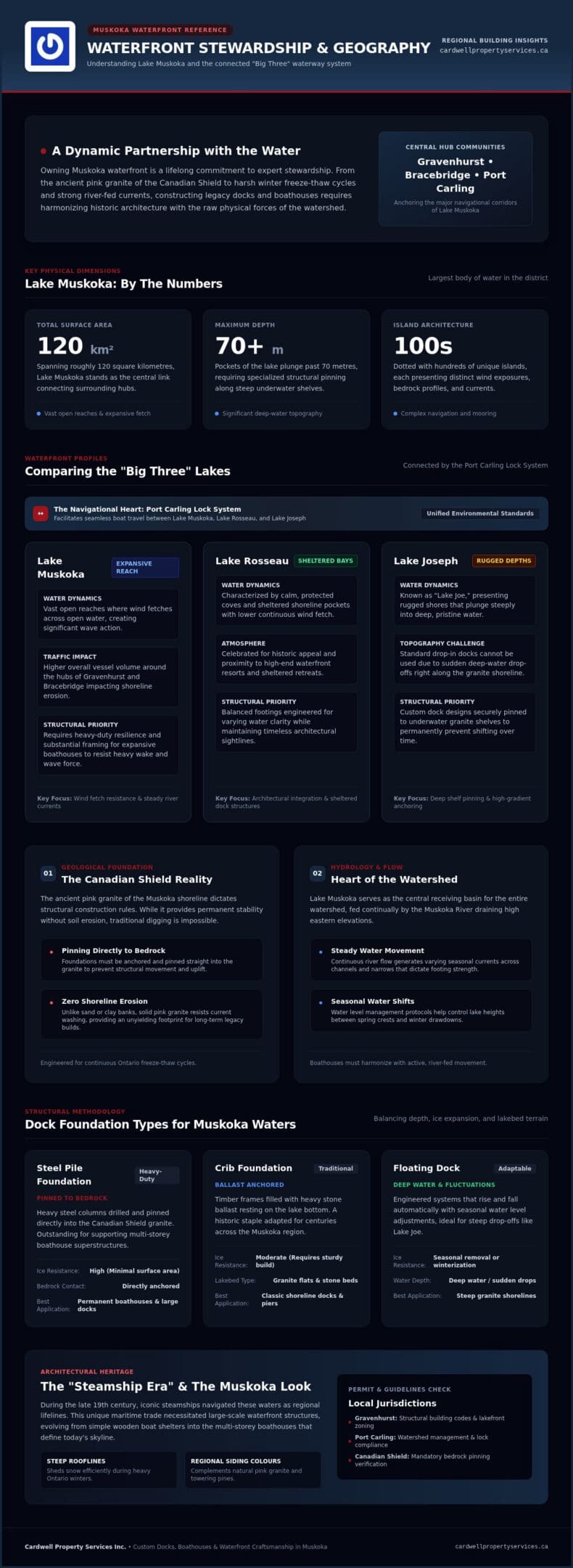
Muskoka Lake isn’t just a body of water; it’s a massive, interconnected system that defines the lifestyle in this part of Ontario. Spanning roughly 120 square kilometres, Lake Muskoka is the largest in the district. It serves as the primary link between the vibrant communities of Gravenhurst, Bracebridge, and Port Carling. Its depth reaches over 70 metres in certain pockets, while its surface is dotted with a complex network of hundreds of islands, each with its own character and history.
During the late 19th century, the region entered the iconic “Steamship Era.” These massive vessels were the lifelines of the north, and their presence necessitated the development of unique shoreline architecture. This era birthed the boathouse culture that remains a hallmark of the area today. What started as simple shelters for wooden launches has evolved into the sophisticated, multi-storey structures that define the region’s skyline. This heritage isn’t just for show; it’s a testament to a century of adapting to the water’s demands.
The Heart of the Muskoka Watershed
The lake acts as a central basin for the entire watershed. It’s primarily fed by the Muskoka River, which carries water from the higher elevations to the east. Because it sits at the centre of this flow, the lake experiences steady movement and significant seasonal shifts. This central position is why many property owners prioritize high-quality boathouse construction. You aren’t just building a storage space; you’re creating a structure that must harmonize with a powerful river-fed system and the varying currents it creates throughout the year.
A Legacy of Waterfront Craftsmanship
Building here means working directly with the Canadian Shield. This ancient pink granite provides an incredibly stable foundation, but it also dictates the terms of every project. Shoreline stability is a major advantage of the shield, as the rock doesn’t erode like sand or soil. However, it requires a specialized approach to anchoring and structural integrity. You can’t simply dig a traditional foundation; you must pin your structures directly to the bedrock.
Preserving the traditional “Muskoka Look” involves a careful balance. We use modern, durable materials that can withstand the harsh freeze-thaw cycles of an Ontario winter, yet we keep the aesthetic grounded in history. Whether it’s the steep rooflines or the specific siding colours, the goal is to ensure new builds feel like they’ve always belonged on these granite shores. It’s about honouring the past while building for a future that lasts.
Comparing the “Big Three”: Muskoka, Rosseau, and Joseph
While they share a watershed, each of the “Big Three” lakes offers a distinct experience for property owners. The navigational heart of this system is the lock system at Port Carling, which allows boaters to move between the lakes with ease. This connectivity is a major draw, but the physical conditions on Muskoka Lake differ significantly from its northern neighbours. Boat traffic is generally higher on the main lake, especially near the hubs of Gravenhurst and Bracebridge, which impacts how we think about shoreline erosion and dock stability.
Lake Muskoka vs. Lake Rosseau
Muskoka Lake is known for its vast, open reaches. Because it has more surface area, wind can fetch across the water, creating more significant wave action than you might find in the sheltered bays of Lake Rosseau. This means any shoreline structure on Muskoka Lake needs to be built with heavy-duty resilience in mind. While Rosseau is often associated with high-end resorts, the main lake maintains a strong connection to its heritage through expansive boathouse designs that prioritize longevity and structural integrity.
The Quiet Allure of Lake Joseph
Lake Joseph, or “Lake Joe,” is frequently the choice for those seeking a more rugged atmosphere. The shorelines here tend to be steeper, and the water often drops off to significant depths quickly. This topography presents unique challenges for construction. You can’t just drop a standard dock into these waters and expect it to last. Specialized custom dock construction is essential here to ensure the structure is securely pinned to the underwater granite shelves, preventing any shifting over time.
Despite their different personalities, all three lakes are protected by the same strict environmental standards. These regulations ensure that water quality remains high across the entire chain, preserving the ecosystem for future generations. Understanding these nuances helps you choose a property that aligns with your lifestyle and long-term goals. If you are unsure which lake best suits your building plans, feel free to reach out to our team for a local perspective on shoreline conditions.
Navigating Seasonal Changes: Water Levels, Ice, and Shoreline Care
Living on Muskoka Lake means respecting the power of the seasons. It’s easy to focus on July sunsets, but the true test of a property happens during the winter freeze and the spring thaw. The Ministry of Natural Resources manages an intricate system of dams to control water levels, yet nature often has its own plans. Understanding these cycles is the first step in protecting your shoreline investment from the physical stress of the environment.
The Impact of Ice on Muskoka Shorelines
Ice is the most formidable challenge for any waterfront structure. As the lake freezes, “ice heave” can exert massive vertical and horizontal pressure, potentially lifting docks or shifting boathouse foundations. In areas with high ice movement, floating docks are often the preferred choice because they rise and fall with the ice, reducing structural strain. For permanent boathouses, we rely on steel pile foundations. These are pinned deep into the bedrock, providing the necessary resistance to withstand the crushing force of a shifting ice pack. Once the spring thaw begins, it’s vital to inspect your footings for any signs of movement or cracked timber.
Managing Water Level Fluctuations
The “Spring Freshet” on Muskoka Lake brings a surge of runoff that can raise lake levels significantly in a matter of days. If your dock isn’t adjustable, this high water can submerge your decking or put undue pressure on the frame. Modern adjustable systems allow you to raise or lower your platform to match the current conditions, preventing water damage. Beyond the dock, proper deck construction plays a critical role in shoreline health. A well-designed deck ensures that heavy spring rains and snowmelt drain away from your cottage foundation rather than pooling and causing erosion.
Many owners ask if lakefront maintenance is an endless chore. The truth is that proactive stewardship prevents the need for major, reactive repairs. By following a simple seasonal checklist, such as checking bolt tightness and inspecting cribbing, you can maintain your property’s value with minimal effort. If you’re concerned about how the coming season might affect your shoreline, contact our team for a professional assessment of your current structures.
Building Your Waterfront Legacy: Docks, Boathouses, and Local Guidelines
Building on Muskoka Lake is an exercise in patience and precision. It’s about more than just aesthetics; it’s about creating a structure that will serve your family for decades. The permit process is often the first hurdle, requiring a deep understanding of local bylaws in municipalities like Gravenhurst and Port Carling. We realize that navigating these regulations can feel daunting, but they exist to protect the very environment that makes this region so special. Local expertise is mandatory because every township has its own set of rules regarding lot coverage and structural dimensions.
Material selection often involves a choice between the natural warmth of Western Red Cedar and the low-maintenance longevity of composite or steel. While cedar is the traditional choice for its iconic look, many residents now opt for steel frames to ensure their boathouse remains level despite the shifting ice conditions we explored in previous sections. Integrating modern amenities like recessed lighting, automated boat lifts, and built-in seating allows you to enjoy contemporary comforts without sacrificing the classic Muskoka charm. This careful balance of tradition and technology is what ensures a property remains both functional and beautiful for the next generation.
Navigating Muskoka Building Codes
Every project must respect the Shoreline Buffer rules, which limit the removal of natural vegetation near the water’s edge. This preserves water quality and prevents erosion. Additionally, side yard setbacks ensure that your new dock or boathouse doesn’t infringe on your neighbour’s view or access. Managing these details requires a methodical approach, which is why many owners rely on professional waterfront project management to handle the red tape from start to finish.
Choosing the Right Foundation for Your Shoreline
The geology of your specific shoreline determines whether steel piles or traditional rock-filled cribs are the best fit. Steel piles are often preferred for their minimal environmental footprint and their ability to be pinned directly into the granite. A professional assessment of your lakebed is the only way to ensure the long-term stability of your construction project. Ready to start your project? Contact our team for a professional consultation.
Securing Your Waterfront Future
Building and maintaining a property on Muskoka Lake is a long-term commitment that requires a deep respect for the region’s unique environmental and regulatory landscape. The granite shores and seasonal ice cycles dictate the structural needs of your docks and boathouses. Understanding the nuances of local building codes is the first step in ensuring your investment remains a stable legacy for your family. Success here isn’t just about the initial construction; it’s about the meticulous planning and stewardship that preserves value over decades.
With a focus on specialized Muskoka building codes and decades of local craftsmanship, our team acts as a dedicated guardian for your property. We’ve been trusted by Lake Muskoka homeowners for generations to navigate these complexities with precision and care. Whether you’re planning a new custom dock or looking to restore a historic boathouse, we’re here to provide the steady hand and expert guidance you need. Consult with our Muskoka waterfront experts today to start planning your next project. We look forward to helping you build something that lasts.
Frequently Asked Questions
How deep is Lake Muskoka on average?
Muskoka Lake has an average depth of approximately 12 metres, though this varies significantly depending on your specific location. In the open basins, the water can reach depths of up to 73 metres. Knowing the depth at your shoreline is vital for choosing the right foundation for a dock or boathouse. We always recommend a professional lakebed assessment before starting any construction project to ensure your structure is pinned securely to the granite bedrock.
Do I need a permit to repair my dock in Muskoka?
Whether you need a permit depends on the scope of the work. Simple repairs, like replacing deck boards or minor timber work, often don’t require one. However, if you’re making structural changes, expanding the footprint, or working with the foundation, you’ll likely need approval from the local municipality and the Ministry of Natural Resources. Navigating these rules in areas like Gravenhurst or Port Carling is a core part of our project management service to keep your build legal.
What is the best type of dock for Lake Muskoka ice conditions?
For the heavy ice conditions on Muskoka Lake, steel pile docks or traditional rock-filled cribs are the most durable permanent options. Steel piles are pinned directly into the bedrock, providing immense resistance against ice heave. If your property is in a high-movement area, a floating dock might be better as it rises and falls with the ice. We specialize in custom dock construction that balances these environmental demands with the longevity you expect for your waterfront investment.
How much do water levels fluctuate on Lake Muskoka throughout the year?
Water levels on the lake are managed through a series of dams, but they still fluctuate seasonally. During the spring freshet, it’s common to see levels rise significantly due to snowmelt and runoff. Throughout the rest of the year, the Ministry of Natural Resources works to maintain a steady range. We design our structures with these fluctuations in mind, often utilizing adjustable systems that allow your dock to stay functional regardless of the current water height.
Can I build a two-storey boathouse on Lake Muskoka?
Building a two-storey boathouse is possible in some areas, but it’s strictly regulated by municipal bylaws. Towns like Gravenhurst and Bracebridge have specific height restrictions and side yard setbacks that dictate what you can build. Many owners opt for a one-and-a-half storey design to include a loft while staying within legal limits. We help you navigate these complex codes to ensure your boathouse design is both beautiful and fully compliant with modern local regulations.
How do I protect my shoreline from erosion during the spring melt?
Protecting your shoreline starts with maintaining a healthy shoreline buffer of natural vegetation. These plants have deep root systems that hold the soil and granite fragments in place during the spring melt. Proper deck construction also plays a role by directing runoff away from the water’s edge. While we don’t offer landscaping, we ensure that our structural builds respect the natural landscape and help manage drainage to prevent erosion from undermining your property’s foundation.