Waterfront Project Management: A Guide for Muskoka Property Owners in 2026
Would you still choose that perfect sunset view if you knew it required navigating a maze of MNR permits, DFO regulations, and the updated 2026 Township development charges? For many Muskoka property owners, the dream of a custom boathouse or a permanent dock often hits a wall of paperwork and tight seasonal windows before the first pile is even driven. Professional waterfront project management isn’t just about hiring a crew; it’s about protecting your investment against the relentless pressure of shifting ice and the strict oversight of local authorities.
We understand that you want a legacy property that lasts for generations, not a project that stalls because of a missed permit or a contractor who doesn’t realize the importance of marine-grade engineering. This guide provides a clear roadmap for managing your shoreline construction from the initial site plan to the final inspection. You’ll discover how to coordinate the various phases of your build, ensuring your project stays on schedule despite our short summers and remains structurally sound through the harshest winters. We will break down the complexities of the current regulatory environment so you can approach your next waterfront build with total confidence.
Key Takeaways
- Understand why building on the water is fundamentally different from land-based construction and how professional waterfront project management protects your long-term investment.
- Navigate the complex web of approvals from the MNR, DFO, and local townships using a proven “order of operations” for 2026 permit requirements.
- Plan your project timeline around the “Muskoka Window” to ensure construction is completed between ice-out and the start of the summer season.
- Learn what to look for in a local partner to ensure your boathouse or dock is built with the marine-grade engineering required for our specific climate.
- Gain a clear roadmap from design to completion to ensure a stress-free transition for your next shoreline revitalization.
Why Waterfront Construction Requires Specialized Project Management
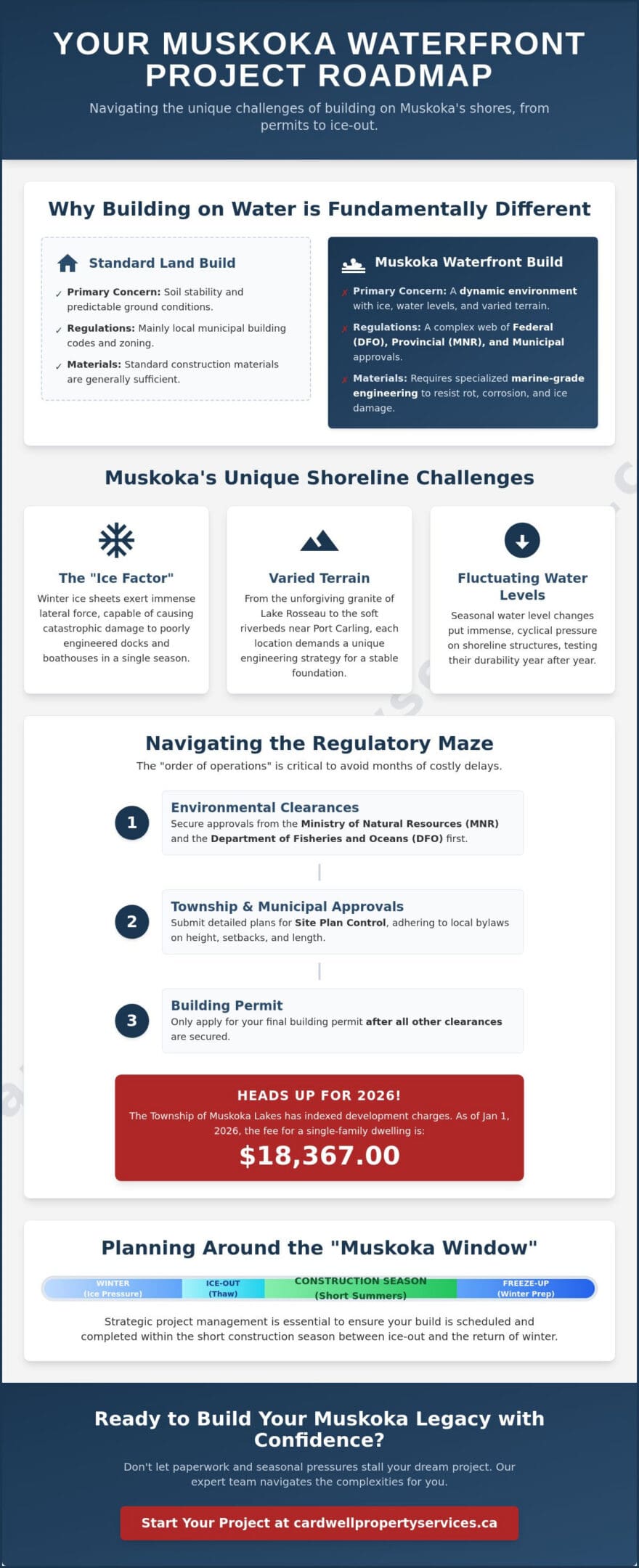
Building at the water’s edge is fundamentally different from any land-based residential construction. On a standard lot, you’re primarily concerned with soil stability and local building codes. On the shoreline, you’re managing a dynamic environment where the land meets the water. Waterfront project management is the orchestration of architectural design, environmental permits, and marine engineering. It requires a specialized approach that respects the delicate balance of the shoreline ecosystem while ensuring the structural integrity of your build. We view this process as an act of stewardship. By prioritizing the preservation of the natural shoreline, we protect both the environment and the long-term legacy of your property.
Applying foundational project management principles to these complex builds allows for a structured approach to scope, time, and budget. However, a waterfront manager must also account for variables that don’t exist in traditional construction. Every decision, from the placement of a silt curtain to the depth of a steel pile, impacts the longevity of the structure and the health of the lake. This level of oversight ensures that your investment is built to last through decades of Muskoka seasons.
The Unique Challenges of the Muskoka Shoreline
Muskoka’s geography is as varied as its lakes. You might be building on the solid, unforgiving granite of Lake Rosseau or the softer, silty riverbeds found near Port Carling. Each terrain requires a different engineering strategy to ensure a stable foundation. Beyond the ground itself, we have to account for fluctuating water levels that can put immense pressure on shoreline structures. Perhaps the most significant challenge is the “ice factor.” Winter pressure from shifting ice sheets can exert massive lateral force on docks and boathouses. Without precise management and engineering, even the most beautiful structures can suffer catastrophic damage in a single season.
Balancing Aesthetics with Structural Durability
A successful project ensures that your custom boathouse design is as durable as it is beautiful. This requires a meticulous focus on material selection. In high-moisture environments, standard hardware won’t suffice; we use materials specifically chosen to resist rot, corrosion, and the constant wear of the elements. Waterfront project management is the specialized oversight required to navigate the intersection of marine engineering and environmental law. By coordinating these elements from the start, we create a seamless transition from the initial design phase to a finished structure that stands the test of time.
Navigating the Regulatory Landscape for Muskoka Builds
Securing the right approvals is often the most daunting phase of any shoreline build. It isn’t just about local building codes; it’s about satisfying a tiered system of municipal, provincial, and federal authorities. In Muskoka, the “order of operations” for these approvals is critical. Attempting to secure a building permit before obtaining environmental clearances is a common mistake that leads to months of delays. Professional waterfront project management ensures that applications move through the Ministry of Natural Resources (MNR) and the Department of Fisheries and Oceans (DFO) in the correct sequence. This methodical approach protects you from work-stop orders and the legal headaches that come with non-compliance.
The Site Plan Control process is another vital hurdle for property owners in 2026. Townships across the region now require detailed plans that outline exactly how a project will impact the shoreline. You also need to account for the latest municipal fees. For example, as of January 1, 2026, the Township of Muskoka Lakes has indexed development charges, with single-family dwellings now carrying a fee of $18,367.00 per unit. Managing these costs and requirements requires a partner who understands the local landscape and can anticipate these expenses before they hit your budget.
Permits: From Township to Federal Agencies
Navigating the specific requirements of Huntsville, Bracebridge, or Gravenhurst requires local insight. Each township has its own set of bylaws regarding boathouse height, dock length, and shoreline setbacks. While federal agencies like the DFO focus on protecting the water, local offices ensure your structure fits within the community’s character. We help coordinate these efforts, ensuring your dock building permits in Ontario are handled with precision. This ensures your project moves from the drawing board to the water without unnecessary friction.
Environmental Compliance and Shoreline Protection
Protecting the lake is a legal requirement, not just a suggestion. During custom dock construction, we must implement strict turbidity controls and silt curtains to prevent sediment from entering the water. You should also be aware of the provincial rules for shoreline work, which dictate how erosion control structures are handled. Failing to realize these environmental standards can lead to significant fines and a damaged reputation within the community. If you are ready to start planning, you might consider discussing your vision with a local expert to ensure every regulation is met from the outset.
Strategic Planning for Muskoka’s Seasonal Construction Cycles
In Muskoka, the calendar doesn’t follow a standard twelve month cycle. Instead, our schedules are dictated by the lake itself. Successful waterfront project management requires a deep understanding of the “Muskoka Window,” that narrow stretch of time between the spring ice-out and the arrival of the busy summer season. If you want to enjoy your property in July and August without the sound of hammers and saws, your project must be choreographed with precision. This often means that planning for a 2026 build should ideally begin at least twelve months in advance to account for permit lead times and contractor availability.
Effective timing ensures that heavy construction is completed before the peak cottage weeks, leaving you with a finished space rather than a work site. By coordinating the arrival of materials and the scheduling of specialized crews well before the first thaw, we can maximize every available day of the construction season. This proactive approach is the only way to avoid the delays that commonly plague projects started too late in the year.
The Ice-In and Ice-Out Management Strategy
The transition between seasons offers unique opportunities for staging and structural work. Scheduling pile driving or crib placement during optimal water levels in the early spring is essential for long-term stability. Project managers realize significant efficiencies by staging heavy materials during the off-season, sometimes using frozen ground to access areas that would be sensitive to heavy machinery in the summer. In Muskoka, the freeze-thaw cycle dictates the construction tempo more than the calendar does. By respecting this natural rhythm, we ensure that the structural integrity of your build is never compromised by rushed timelines or poor conditions.
Managing Logistics on Water-Access Properties
Properties on islands or remote points present a distinct set of logistical hurdles. Transporting equipment and materials by barge is a slow, meticulous process that requires perfect synchronization of all trades. From electricians to deck builders, every professional on-site must be scheduled to arrive in a logical sequence to avoid costly downtime. We also prioritize minimizing the impact of construction on your neighbours. Proper management ensures that debris is contained and noise is kept to a minimum, preserving the quiet enjoyment of the lake for everyone. If you are ready to secure your spot for the upcoming season, you can reach out to our team to start your project timeline.
Selecting a Partner for Your Waterfront Revitalization
Choosing the right lead for your build is the final piece of the puzzle. A general contractor who specializes in waterfront project management does more than hire crews; they act as the primary guardian of your investment. This role requires a sophisticated understanding of marine engineering and the patience to oversee the tiered approval processes we’ve discussed. You aren’t just looking for a builder; you’re entering a long-term partnership to protect a structure that will eventually become a family legacy.
Local expertise in areas like Gravenhurst, Parry Sound, and the surrounding townships is vital. Every bay has its own wind patterns and every shoreline has its own soil composition. A partner with deep roots in the community understands these nuances and knows which local officials require specific documentation. Prioritizing comprehensive waterfront project management means the technical details are handled by someone who knows the lake as well as you do. This ground-level insight prevents the oversights that lead to structural issues or legal complications years later.
Questions to Ask Your Waterfront General Contractor
Before you commit, verify your builder’s technical proficiency. Inquire about their specific experience with foundation types like steel piles or rock-filled cribs. A true expert will explain why one is better suited for your specific lakebed. For out-of-town owners, communication is just as important as the build itself. Ask how they provide updates and manage logistics while you are away. If you’re looking for specialized waterfront deck contractors in Ontario, ensure their previous work has successfully weathered several freeze-thaw cycles.
The Cardwell Approach to Professional Stewardship
At Cardwell Property Services Inc., we view every shoreline build as an act of stewardship. Our commitment to quality craftsmanship and organized general construction ensures your project is handled with the respect it deserves. We manage the intricate logistics and permit requirements so you don’t have to. Our goal is to move you seamlessly from a construction site to a finished retreat. By choosing a steady, expert hand, you can realize your vision for the perfect Muskoka property with total confidence.
Securing Your Shoreline Legacy
Mastering the complexities of shoreline construction ensures your boathouse or dock survives more than just a few Muskoka winters. We’ve explored how navigating the regulatory maze and timing your build with the ice-out cycle are the pillars of successful waterfront project management. By coordinating these moving parts well in advance, you protect your property’s value and your family’s summer peace of mind. It’s about more than just building; it’s about realizing a vision that respects the natural beauty of our lakes while providing a durable foundation for your retreat.
As a family-owned and operated business with decades of experience in the Muskoka region, Cardwell Property Services Inc. brings specialized knowledge of local building codes and environmental permits to every site. We prioritize quality craftsmanship and professional stewardship, treating your property with the care it deserves. You don’t have to face the 2026 development charges or MNR requirements alone. Our team is here to handle the logistics so you can focus on enjoying the water. Let Cardwell Property Services Inc. manage your next Muskoka project. We look forward to helping you create a space where memories are made for years to come.
Frequently Asked Questions
Do I need a permit to repair my existing dock in Muskoka?
Yes, you generally need a permit if the repairs involve structural elements like the cribs, piles, or the overall footprint of the dock. While simple maintenance like replacing deck boards might not require a full application, any work that touches the lakebed or changes the size of the structure falls under the jurisdiction of the MNR and your local township. It’s always best to check with your municipality first to avoid costly fines.
How long does the permit approval process typically take for a boathouse?
The approval process for a new boathouse usually takes between four to eight months from the initial application to the day you break ground. This timeline accounts for the sequential reviews required by the Ministry of Natural Resources, the DFO, and local building departments. Because of these lengthy windows, we recommend starting the design and application phase at least a full year before your desired completion date.
Can I build a boathouse with living quarters on any Muskoka lake?
No, the rules for habitable boathouses vary significantly between townships and specific lakes. Many areas have strict bylaws that limit boathouses to a single storey or prohibit plumbing and sleeping quarters entirely to protect water quality and shoreline character. If you are planning a residential unit, remember that as of January 2026, the Township of Muskoka Lakes also applies specific development charges for these additions.
What is the best time of year to start a waterfront construction project?
The most effective strategy is to start your planning in the late summer or early autumn so that permits are in hand before the spring ice-out. This allows your team to stage materials during the winter months and hit the ground running during the “Muskoka Window” in early spring. Starting early ensures that the heavy lifting is finished before the busy summer season begins on the water.
Why should I hire a project manager instead of managing individual trades myself?
Professional waterfront project management provides a single point of accountability for the design, environmental compliance, and marine engineering of your build. Managing individual trades yourself often leads to scheduling conflicts and missed permit requirements that can stall a project for months. A dedicated manager ensures that every professional, from the pile driver to the electrician, is synchronized within our short seasonal construction windows.
How does waterfront project management differ from standard home renovations?
Waterfront project management is unique because it deals with a building site that is constantly in motion. Unlike a standard home renovation, a shoreline build must withstand lateral ice pressure, fluctuating water levels, and strict environmental laws designed to protect fish habitats. The logistics often involve barging materials to water-access properties, which requires a much higher level of coordination than a typical land-based renovation project.