
Boathouse Structural Repair in Muskoka: Preserving Your Waterfront Legacy
What if the very ice that makes Muskoka winters beautiful is quietly dismantling your family’s waterfront legacy? For many cottage owners, the necessity of boathouse structural repair Muskoka becomes a sudden reality after a season of heavy ice heaving or shifting water levels. You’ve likely spent decades enjoying the view from your upper deck, so noticing a new tilt in the floorboards or hearing the groan of stressed timber can be deeply unsettling. It’s natural to worry about the structural stability of your building, especially when faced with the complex maze of local building permits and shore road allowance requirements.
We understand that your boathouse is more than just a place to store a boat; it’s a piece of history that deserves a methodical, expert hand. This article will help you identify the early warning signs of foundation failure and explain the professional restoration process that keeps Muskoka’s landmarks standing. We’ll walk you through assessing recent flood damage, navigating updated township regulations, and choosing a “Dock Medic” approach that prioritizes longevity over quick fixes. By the end, you’ll have a clear roadmap to ensure your boathouse remains level, stable, and ready for another fifty years of memories.
Key Takeaways
- Spot the subtle indicators of foundation movement, such as sticking doors or misaligned frames, to address structural issues before they become catastrophic.
- Understand the unique environmental pressures of the region, specifically how lateral ice pressure and rising water levels threaten the integrity of permanent shoreline structures.
- Learn why a methodical, patient approach to boathouse structural repair Muskoka is the only way to preserve a century-old legacy while meeting modern building standards.
- Compare traditional timber crib restoration with the long-term stability offered by modern steel pile foundations to find the most reliable solution for your waterfront property.
- Gain clarity on how to navigate complex local regulations, including the latest requirements for shore road allowances and building permits in the Township of Muskoka Lakes.
Recognizing the Signs of Boathouse Structural Failure
Early detection is the difference between a routine restoration and a structural emergency. In Muskoka, where our buildings face intense environmental pressure, recognizing the first signs of movement is essential. A traditional boathouse often serves as the heart of a cottage property, but its position over the water makes it vulnerable to shifting foundations. One of the most reliable ways to gauge the health of your building is the “stuck door” test. If a door that once opened smoothly is now catching on the frame, or if a window latch no longer aligns, the building’s frame is likely under significant stress. These aren’t just minor settling issues; they indicate that the foundation below is moving.
Visible Indicators of Foundation Shifting
Take a moment to view your boathouse from the lake. A healthy structure should have a perfectly straight roofline. If you notice a dip in the ridge or an uneven slope toward the water, the main support beams are likely compressing. On the exterior, look for cracks in the cladding or gaps where the walls meet the deck. Inside any living quarters, new cracks in the drywall or floorboards that feel “springy” or uneven when you walk near the slips are clear signals that you need to investigate boathouse structural repair Muskoka before the next winter season arrives.
Sub-Surface Warning Signs
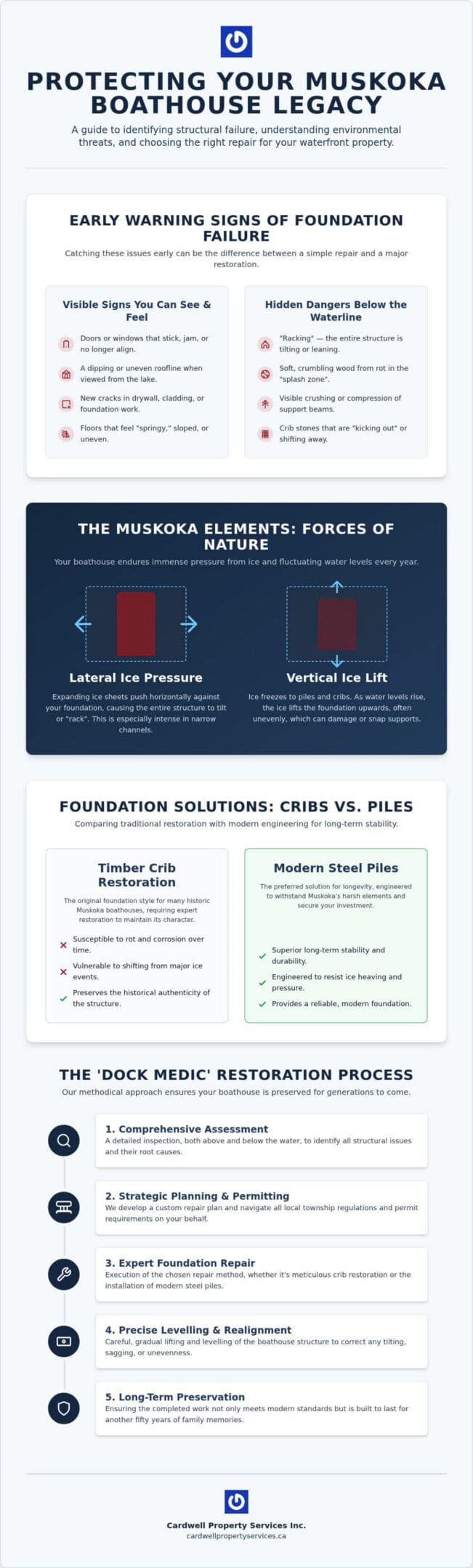
The most critical damage often occurs beneath the surface or within the splash zone. In older Muskoka boathouses, you might find timber cribs that are beginning to rot or steel systems showing deep corrosion. You should also watch for “racking,” which refers to the lateral shifting of a boathouse frame that causes the entire structure to tilt or lean. This type of movement is particularly common after a season of heavy ice pressure. Check the following areas during your next inspection:
- Crib Stones: Look for stones that are “kicking” out or shifting away from the timber frame under the water line.
- Beam Compression: Identify points where the horizontal beams appear to be crushing or flattening against the vertical supports.
- Splash Zone Rot: Inspect the area just above the water line for wood that feels soft or crumbles when probed.
Addressing these sub-surface issues requires a methodical approach that respects the original craftsmanship of the building while providing the stability needed for the next fifty years. Identifying whether your foundation needs a simple reinforcement or a complete transition to a modern system is the first step in protecting your waterfront legacy.
The Muskoka Elements: Ice Damage and High Water Levels
The geography of Lake Muskoka and Lake Rosseau plays a direct role in the physical stress placed on your waterfront assets. Large bodies of water allow for significant ice expansion, creating lateral pressures that can easily shift even the most robust foundations. When owners ignore these forces, the need for boathouse structural repair Muskoka often arises after a single harsh season. Historically, events like the severe 2019 flooding, and more recently the record high water levels of 2026, have taught us that traditional building heights are no longer sufficient. These events serve as a reminder that we are building in a changing environment that requires a specialized, methodical approach to preservation.
The Mechanics of Ice Heaving
Ice heaving is a recurring threat that works in two distinct ways. It’s not just a matter of ice pushing against the wood; it’s a complex interaction between temperature and water levels. To understand how your foundation is being tested, consider these two forces:
- Lateral Pressure: Expanding ice sheets push horizontally against the side of a structure with immense force, often causing “racking” or tilting.
- Vertical Lift: Ice “grips” the timber cribs or steel piles. If the water level rises beneath the ice, the entire structure is pulled upward, often unevenly and with enough force to snap heavy bolts.
Boathouses located in narrow channels or sheltered bays face different risks than those on open water. In tight spaces, the ice has no room to expand outward. Instead, it focuses all its energy on your foundation, acting as a slow-motion hydraulic press against your cribs.
Mitigating Water Level Fluctuations
Designing for the “new normal” means preparing for higher spring peaks than we saw decades ago. Modern restoration involves lifting structures to safer elevations while honouring their historic character. Bubbler systems can help by keeping water moving and preventing ice from forming a solid grip on your supports, providing a critical defence during the coldest months. Integrating professional waterfront project management into your repair plan ensures these environmental factors are addressed long before the first freeze. If you’ve noticed your building shifting after a recent thaw, it’s wise to speak with a specialist about securing your foundation for the long term.
Structural Repair Methodologies: From Cribs to Steel Piles
When we approach a project, we don’t just look for a quick fix. We use what we call the “Dock Medic” approach. This is a methodical, slow and steady process of lifting and securing heavy structures to ensure they remain stable for the next 50 years. Choosing the right methodology for boathouse structural repair Muskoka depends on the age of your building, the depth of the water, and the specific condition of the lakebed. A successful project balances the need for modern durability with the desire to keep that classic cottage aesthetic intact.
Crib Dock Restoration and Leveling
Many historic Muskoka boathouses sit on traditional timber cribs. These are essentially heavy wooden crates filled with granite rock. Over time, the timber in the splash zone begins to decay. Restoration involves carefully removing the original rock, replacing the rotted timber with new, high quality wood, and then re-filling the structure. Keeping your original footprint is often better for navigating boathouse permits with local townships. It’s also vital to ensure the new crib is properly keyed into the lakebed to prevent any future sliding or shifting.
Steel Pile and Beam Replacement
For owners looking for ultimate stability against ice heave, steel piles offer a modern alternative. We can integrate steel support into existing timber structures to add longevity without losing the building’s original character. Using precision hydraulic lifting, we can realize a level floor again, even if the building has been tilting for decades. Steel beams are the preferred choice for heavy two-story boathouses because they provide the necessary rigid support to handle the immense weight of living quarters above without bowing over time. This combination of traditional respect and modern engineering ensures your boathouse remains a stable part of your family’s history.
If you’ve noticed your building shifting after a recent thaw, it’s wise to speak with a specialist about securing your foundation for the long term.
Preserving Your Waterfront Legacy in Muskoka
Muskoka boathouses are more than simple storage spaces; they are the defining landmarks of our lakes. These structures carry the history of families who have summered here for generations, from the granite shores of Lake of Bays to the bustling hubs of Port Carling. Protecting these buildings requires more than mechanical skill; it requires a deep respect for the original builders who established our waterfront traditions. When you commit to boathouse structural repair Muskoka, you aren’t just fixing a foundation. You’re ensuring a “Muskoka Original” remains a proud part of the landscape for another century.
A “quick fix” is often the enemy of longevity in our climate. The intense freeze-thaw cycles and shifting water levels demand a patient, slow and steady approach to craftsmanship. We’ve seen many instances where rushed repairs fail after a single winter because they didn’t account for the unique lateral pressures of the ice. Taking the time to do things correctly the first time is the only way to guarantee a result that lasts for the next fifty years or more.
Restoring Historic Boathouse Structures
We often encounter structures built over 125 years ago, held together with hand-forged square nails and traditional timber joinery. Dealing with these century-old materials requires a specialized understanding of historic building techniques. Our restoration process focuses on straightening walls that have tilted over time and securing the entire building to new custom docks. This creates a unified and stable platform that can withstand environmental stress. Saving a historic boathouse provides immense emotional value, preserving the character that makes your cottage property truly unique.
Choosing a Local Structural Partner
The environmental conditions on Lake Muskoka differ significantly from the sheltered channels near Port Carling. Local expertise is essential for understanding how specific currents and ice patterns will affect your repair. You need a partner who can manage the entire construction process, from the initial assessment to the final structural stabilization. Moving from a state of worry about a potential collapse to the security of a level, reinforced building is a journey that requires professional stewardship and a commitment to quality. Contact Cardwell Property Services Inc. to assess your boathouse structural repair needs today.
Securing Your Waterfront Legacy for Generations to Come
Your boathouse is a cornerstone of the Muskoka experience, but it’s constantly tested by the relentless pressure of ice and fluctuating water levels. Identifying subtle shifts early can prevent catastrophic failure, and a methodical approach to restoration is the only way to honour the building’s original craftsmanship. When you choose a methodical path for boathouse structural repair Muskoka, you’re investing in a solution that respects the past while protecting your property’s future value.
As specialists in historic restoration since the 1890-era builds, we bring decades of experience to every project. We’re trusted by cottage owners across Lake Muskoka, Rosseau, and Joseph to handle complex ice damage and high water level recovery with precision. Don’t let a shifting foundation put your family’s heritage at risk; our “Dock Medic” team is ready to help you navigate the repair process with transparency and specialized knowledge.
Book a “Dock Medic” consultation for your Muskoka boathouse today to ensure your building remains a stable part of your shoreline for another fifty years. We look forward to helping you preserve your piece of Muskoka history.
Frequently Asked Questions
How much does boathouse structural repair cost in Muskoka?
Repair costs vary significantly based on the foundation type and the extent of the environmental damage. Factors such as water depth, site accessibility, and the need for specialized hydraulic lifting equipment influence the final investment. While a new two-slip boathouse in 2026 can cost between $300,000 and $600,000, restoration is often a more practical way to preserve a structure’s “legal non-conforming” status. We provide project-based quotes after a detailed on-site assessment of your shoreline.
Can a leaning boathouse be straightened or does it need to be rebuilt?
A leaning boathouse can often be straightened using a methodical hydraulic lifting process. We specialize in leveling structures that have shifted due to ice heave or foundation settling. Straightening is preferred because it preserves the building’s historic character and grandfathered zoning rights. If the main support beams remain sound, we can reinforce the foundation with steel piles or rebuilt timber cribs to ensure the structure remains level and stable for decades.
Do I need a permit for structural boathouse repairs in Ontario?
Most structural repairs in Muskoka require a building permit from your local township, such as Bracebridge or Gravenhurst. As of June 2026, the Township of Muskoka Lakes requires property owners to own the Original Shore Road Allowance before a permit is issued. Projects involving the lakebed may also require approval from the Ministry of Natural Resources and Forestry, though repairs with less than 15 square metres of contact may follow different provincial rules.
What is the best foundation for a boathouse to prevent ice damage?
Steel pile foundations are currently considered the most resilient option for boathouse structural repair Muskoka. Unlike traditional timber cribs, steel piles offer minimal surface area for ice to grip, which significantly reduces the risk of vertical lifting during the spring thaw. When integrated with heavy-duty steel beams, this foundation type provides the lateral strength needed to withstand the immense pressure of shifting ice sheets on Lake Muskoka or Lake Rosseau.
How long does a typical boathouse structural restoration take?
A typical structural restoration can take anywhere from three to eight weeks, depending on the complexity of the lift and the condition of the lakebed. We prioritize a slow and steady pace to ensure the building is leveled safely without causing stress to the upper frame. Factors like permit approval times and seasonal weather conditions in Port Carling or Huntsville also play a role in the project’s overall timeline and the methodical execution of the work.
Can you repair a boathouse crib without removing the entire building?
We can repair or rebuild a timber crib while the boathouse remains in place. This is achieved by temporarily supporting the building with hydraulic jacks or steel beams while the old rock is removed and the decayed timbers are replaced. This methodical approach allows us to restore the foundation’s integrity without the need for a costly total demolition, effectively extending the life of your waterfront legacy while keeping the original structure completely intact.