Boathouse Permit Requirements in Muskoka: The 2026 Property Owner’s Guide
What if the biggest threat to your summer sanctuary isn’t the shifting winter ice, but a missed line in a 2026 zoning amendment? For many cottagers, the dream of a new shoreline build starts with sketches of timber and glass, but it quickly meets the reality of a complex regulatory environment. Understanding the specific boathouse permit requirements Muskoka townships demand is no longer just a formality; it’s a vital step in protecting your property’s value and your family’s legacy.
It’s natural to feel overwhelmed by the overlapping layers of municipal and provincial jurisdiction, especially when a simple oversight could lead to heavy fines or a ruined building season. You deserve a process that is as steady and reliable as the structures themselves. This guide offers a clear roadmap through the latest 2026 regulations, including the mandatory purchase of Original Shore Road Allowances and updated second-storey width restrictions. We will break down exactly how to navigate the application process and identify the specific size thresholds for your lake. By the end, you’ll have the knowledge to move forward with confidence, ensuring your project is fully compliant and built to endure for generations.
Key Takeaways
- Learn how to navigate the layers of provincial and municipal authority to ensure your project respects both the law and the local environment.
- Understand the 15-square-metre rule and why permanent structures like crib docks always trigger the specific boathouse permit requirements Muskoka townships mandate.
- Recognize why purchasing your Original Shore Road Allowance is now a mandatory prerequisite for securing building permits in Muskoka Lakes.
- Discover how professional design helps you maximize your structure’s potential while staying within the new 2026 second-storey width restrictions.
- Gain a clear roadmap for gathering surveys and site plans to avoid administrative delays and protect your building season.
Understanding the Hierarchy of Ontario Waterfront Authorities
Building a structure over water isn’t the same as building a shed in your backyard. In Ontario, the lakebed is almost always Crown land, which means your boathouse permit is actually a legal grant to occupy public space. Because of this unique status, the boathouse permit requirements Muskoka property owners must follow involve a multi-layered approval process that protects the environment as much as it regulates construction.
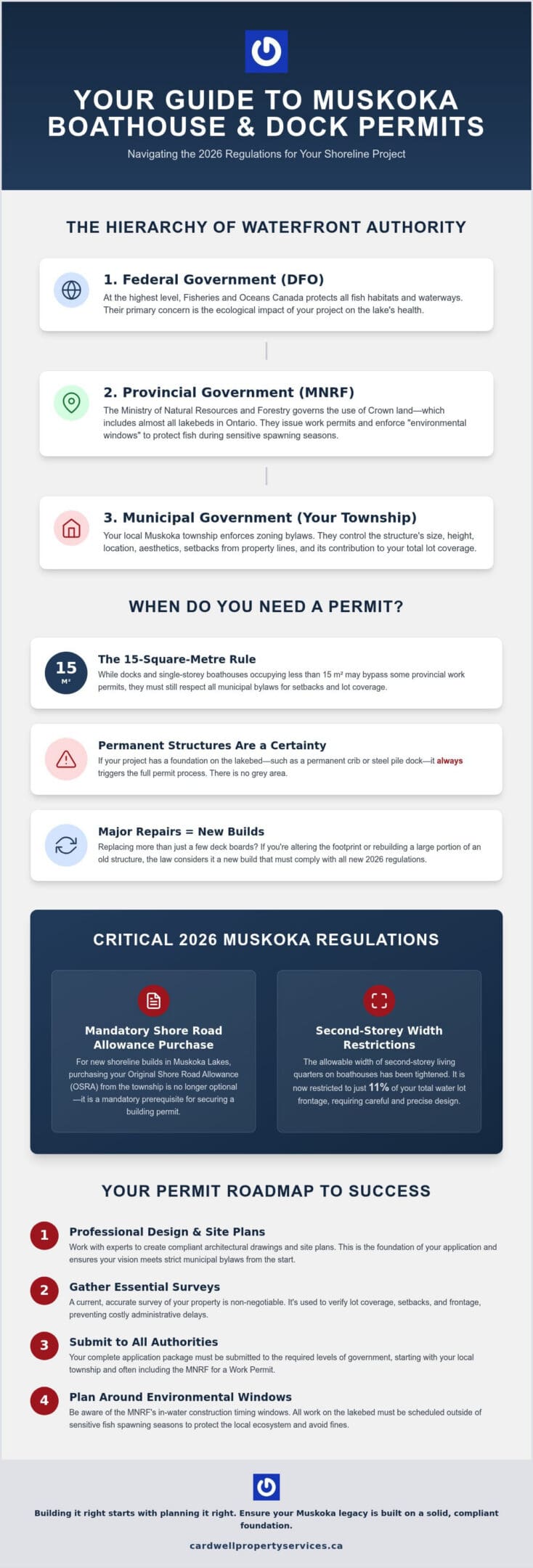
To get it right, you have to satisfy three levels of authority. At the top, the Federal government (Fisheries and Oceans Canada, or DFO) protects the water and fish habitat. In the middle, the Province manages the land under the water. Finally, your local township in the District Municipality of Muskoka controls the aesthetics, size, and location of the structure. This region has some of the most specific shoreline bylaws in Ontario to protect its famous water quality and rocky vistas.
Provincial Oversight: The Ministry of Natural Resources and Forestry (MNRF)
The MNRF governs anything that touches the lakebed under the Public Lands Act. This act is designed to protect shoreline integrity and shared water resources. Depending on your design, you may require either a ‘Letter of Approval’ or a formal ‘Work Permit’. For example, simple floating docks often fall under general rules, but structural footings or cribs that rest on the bottom require a permit. The MNRF also enforces environmental windows. These are specific dates when construction is prohibited to protect sensitive fish spawning seasons. Planning your project around these windows is essential for a smooth building season.
Municipal Bylaws and Conservation Authorities
While the province cares about the lakebed, your local building department in Gravenhurst or Bracebridge focuses on the land and the community. Your boathouse isn’t an isolated structure; it counts toward your total lot coverage footprint. If you’ve already maximized your cottage size, your boathouse dimensions might be restricted. Setback requirements are equally strict. These ensure your structure doesn’t crowd your neighbours or obstruct navigation. Your local municipal office is usually your primary point of contact, as they’ll ensure your project meets the boathouse permit requirements Muskoka townships have updated for 2026.
When Do You Actually Need a Permit for Your Boathouse or Dock?
Determining when a project transitions from a simple weekend fix to a regulated construction site is a common point of confusion for many cottagers. While small, seasonal docks might bypass some red tape, the boathouse permit requirements Muskoka authorities enforce are rarely optional for permanent structures. If your project involves a roof, a foundation on the lakebed, or a significant footprint, you are almost certainly entering the formal permit process.
Repairs can also be a grey area. Replacing a few deck boards is standard maintenance. However, if you’re replacing a significant portion of the structure or changing the footprint, the law often views this as a new build. This means your project must now comply with 2026 zoning bylaws, which are often stricter than the regulations in place when the original structure was built decades ago. Ensuring you have the right paperwork before the hammers start swinging is the only way to protect your investment from future compliance issues.
Boathouse Restrictions and Upper-Level Living
Boathouses represent a significant jump in regulatory scrutiny compared to open docks. In areas like Muskoka Lakes and the Township of Seguin, the rules regarding height and second-storey living quarters are particularly meticulous. For instance, recent 2026 updates in Muskoka Lakes have tightened second-storey width restrictions to just 11% of the lot frontage. Navigating these nuances requires a design that balances your vision with the strict legal limits of your shoreline. If you’re planning a complex build, it’s wise to learn more about our custom boathouse construction services to see how professional planning makes a difference.
Permanent Crib Docks vs. Floating Systems
The choice between a floating system and a permanent structure like a crib or pile dock often dictates your permit path. Floating docks are frequently seen as less intrusive, but they still must respect municipal setbacks and lot coverage limits. In Ontario, docks and single-storey boathouses that occupy less than 15 square metres of shore land generally do not require a provincial work permit, provided they follow established environmental standards. However, if your shoreline is adjacent to a municipal road allowance, you may still need a District of Muskoka Licence of Occupation to proceed legally. To ensure your foundation is both compliant and durable, you can explore our custom dock construction options or ask us for a professional site assessment to clarify your specific requirements.
The Step-by-Step Process to Securing Your Muskoka Building Permit
Securing a permit is a meticulous journey that begins long before the first pile is driven. In 2026, preparation is the only real antidote to project delays. Many property owners wait until the ice thaws to begin their applications, but this often leads to a lost building season. For a spring project, the ideal time to start is the previous autumn. This allows enough time to navigate the boathouse permit requirements Muskoka offices enforce, especially with the increased scrutiny on shoreline environmental protection.
Common pitfalls often stem from incomplete documentation. Failing to verify if you’ve purchased your Original Shore Road Allowance (OSRA) is a frequent cause for rejection in the Township of Muskoka Lakes. Since June 10, 2026, a building permit will not be issued without proof of OSRA ownership or a conditional agreement. Meticulously checking these details early prevents the frustration of a stalled application.
Phase 1: Professional Drawings and Site Plans
Hand-drawn sketches rarely pass a municipal desk in 2026. Modern requirements demand professional drawings that include precise shoreline measurements and water depth readings. These aren’t just bureaucratic hurdles; they’re essential for structural integrity and long-term value. Accurate site plans ensure your boathouse respects setbacks and doesn’t interfere with navigation or neighbouring properties. This level of detail demonstrates a commitment to stewardship and helps your project move through the system without unnecessary questions.
Phase 2: Navigating the MNRF and DFO Applications
Your project often requires a federal ‘Request for Review’ from Fisheries and Oceans Canada (DFO). This step ensures your build won’t harm aquatic habitats. Simultaneously, you’ll need to manage the MNRF online portal for Public Lands Act applications. While the Ontario government proposed streamlining these permits in August 2026, the process still requires methodical attention to detail to ensure your footings are legally authorized. You can see our general contracting and project management services for an example of how we handle these complex technical layers.
If you’re ready to start your project with a partner who understands the local landscape, reach out to us today for a professional consultation to get your paperwork moving.
Why Professional Project Management is Essential for Waterfront Success
The complexity of waterfront construction means that a builder’s role extends far beyond the toolkit. In the Muskoka region, where a project might cross the desk of multiple government agencies, having a partner who understands the local permit landscape is the difference between a successful build and a costly mistake. Professional design ensures that your structure maximizes its potential without exceeding the strict lot coverage limits that define our shorelines. By aligning your vision with the current boathouse permit requirements Muskoka authorities demand, you protect the long-term value of your property.
A well-managed project is an orderly one. When your builder takes responsibility for the paperwork, they ensure that every detail, from the environmental windows for fish spawning to the specific setbacks of your township, is meticulously addressed. This structural and legal integrity provides a sense of security that a transactional builder simply can’t offer. It’s about more than just a summer project; it’s about the preservation of your investment and the peace of mind that comes with knowing things were done correctly from the start.
The Long-Term Risks of Non-Compliance
Some owners believe that “asking for forgiveness” is a viable strategy for cottage upgrades. On Ontario shorelines, this is a dangerous and expensive gamble. A structure built without the proper provincial or municipal approvals can lead to an Order to Comply, which often mandates the complete removal of the boathouse at the owner’s expense. Beyond the immediate financial loss, these infractions can trigger significant environmental fines and create red tape that complicates future property sales. Ensuring every beam and footing is fully documented preserves your property’s legacy and ensures its marketability for decades to come.
Building for the Future with Cardwell Property Services Inc.
At Cardwell Property Services Inc., we act as the steady hand throughout the evolution of your project. We take pride in our role as dedicated guardians of your property, handling the logistical heavy lifting from the initial survey to the final municipal inspection. Our process is rooted in a respect for craftsmanship and structural integrity, ensuring that your boathouse is built to endure the unique environmental challenges of the Muskoka lakes. For a deeper look at how we protect your investment, read our sibling guide on Waterfront Project Management: A Guide for Muskoka Property Owners in 2026. We don’t just build structures; we build partnerships that prioritize quality over quick fixes.
Protecting Your Muskoka Legacy through Proper Planning
Building on the water is a privilege that comes with a significant responsibility to the land and the community. As we’ve explored, the boathouse permit requirements Muskoka property owners face in 2026 are detailed and demand a methodical approach. Success depends on understanding the layers of authority, from provincial lakebed oversight to specific township bylaws in Gravenhurst and Bracebridge. By starting your planning early and respecting the environmental windows, you ensure your project moves forward without the stress of avoidable delays.
At Cardwell Property Services Inc., we bring decades of experience in Muskoka waterfront construction to every project we handle. We act as your steady partner, providing comprehensive project management that carries you from the initial custom design through to the final permit approval. Our deep familiarity with local regulations means you can focus on the future of your property while we manage the technical complexities. It’s about building something that lasts for generations.
Contact Cardwell Property Services Inc. to start your permit-ready boathouse project today. Your shoreline deserves the care of a master craftsman who values both tradition and integrity. We look forward to helping you realize your vision with precision and care.
Frequently Asked Questions
Do I need a permit to repair my existing boathouse in Muskoka?
You generally need a permit if the repairs involve structural elements or any change to the existing footprint. While replacing surface decking is often considered maintenance, replacing support cribs or roof structures triggers boathouse permit requirements Muskoka building departments enforce. It’s essential to document the existing structure’s condition before starting. This ensures that your restoration preserves the legal status of older builds while meeting modern safety standards.
What is the maximum size a dock can be in Ontario without an MNRF permit?
In Ontario, you can build a single-storey boathouse or dock that occupies up to 15 square metres of shore land without a formal work permit from the MNRF. This exemption only applies if the structure follows specific environmental standards and doesn’t involve dredging or filling. However, you must still comply with municipal zoning bylaws in towns like Gravenhurst or Bracebridge, which may have stricter size limits regardless of provincial rules.
How long does the boathouse permit approval process take in 2026?
You should expect the approval process to take between four and six months in 2026, depending on the complexity of your shoreline. Because the process involves municipal building departments, the MNRF, and potentially federal reviews, starting in the autumn is the best way to ensure a spring build. Delays are common if surveys are outdated or if your property requires a purchase of the Original Shore Road Allowance first.
Can I add living quarters to my boathouse in the Township of Muskoka Lakes?
Adding living quarters is subject to very specific zoning bylaws that vary by township. In the Township of Muskoka Lakes, 2026 regulations have tightened restrictions, including reducing the permissible width of second storeys to 11% of the lot frontage. These boathouse permit requirements Muskoka property owners face often require additional health unit approvals for septic capacity. Navigating these layers requires a professional design that respects both the lakebed and legal limits.
Does a floating dock require a municipal building permit?
Yes, a floating dock almost always requires a municipal building permit in Muskoka if it exceeds a certain size or is a permanent seasonal fixture. While the province might not require a work permit for floating systems under 15 square metres, local townships regulate them to manage lot coverage and shoreline density. In areas like Port Carling or Huntsville, your dock is part of your total allowable shoreline structures, making professional oversight vital.
What happens if I build a boathouse without a permit in Muskoka?
Building without a permit can lead to heavy provincial fines and a municipal Order to Comply. In the worst-case scenario, you may be forced to remove the entire structure at your own expense. Beyond the immediate legal costs, unpermitted structures create significant issues during property resale, as modern buyers and lenders require proof of compliance. It’s a risk that can permanently damage your property’s legacy and market value in the competitive Muskoka market.