
Dock Ladder & Accessory Guide for Huntsville Waterfronts
What if the dock ladder that makes summer swims easier is also the accessory most at risk from winter ice? On a Muskoka waterfront, choosing the right ladder means thinking beyond easy entry. A dock builder Huntsville property owners consult can help plan accessories around changing water levels, seasonal conditions and the structure of a custom dock.
It’s natural to want safe, simple access for family and guests without drilling carelessly into valuable decking or leaving hardware exposed to ice. The right choices can support everyday use and suit the look of a cottage, while careful installation helps protect the dock’s structure.
This guide explains what to consider when choosing a dock ladder and other useful accessories, including how water-level changes around Lake of Bays can affect placement. You’ll also find practical guidance on securing accessories, deciding what to remove or raise out of the water before winter, and maintaining them through the seasons. With careful planning, your dock can be welcoming and functional while remaining well cared for year after year.
Key Takeaways
- Choose dock hardware with Muskoka’s changing water levels and winter ice in mind, rather than appearance alone.
- Compare ladder step designs for comfortable, steady access that suits the people who use your dock.
- Plan mounting points before drilling to help protect custom decking and the dock’s structure.
- Ask a dock builder Huntsville property owners can consult about fitting accessories securely to a custom dock.
- Make seasonal checks and removal part of your routine to help preserve dock hardware through winter conditions.
Selecting the Right Hardware with a Dock Builder Huntsville Shorelines
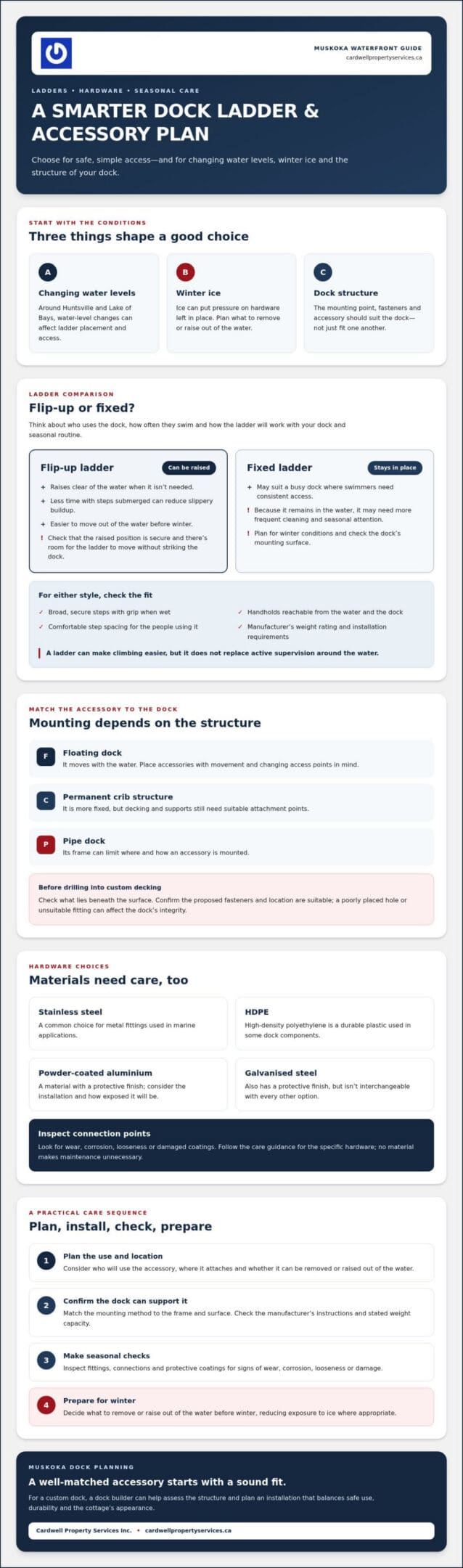
A ladder or cleat may seem like a small addition, but its material and mounting need to suit the dock and the conditions it faces. Around Huntsville and Lake of Bays, changing water levels can affect access to the water, while winter ice can put pressure on hardware left in place. Choosing with those realities in mind helps keep accessories useful and protects a carefully built waterfront.
Start by considering how each accessory will be used, where it will attach and whether it can be removed or raised out of the water for winter. This practical approach leaves room for convenience while respecting the character and construction of a Muskoka cottage dock. For a foundational overview, see this definition of a dock.
Marine-Grade Materials for Longevity
Hardware faces repeated exposure to water, moisture and seasonal temperature changes. Stainless steel and high-density polyethylene (HDPE) are common choices for marine applications. Stainless steel is used for metal fittings, while HDPE is a durable plastic used in some dock components. Neither material makes maintenance unnecessary. Check fittings and connection points for wear, corrosion or looseness, and follow the care guidance for the specific hardware.
Powder-coated aluminium and galvanised steel each have a protective finish, but they aren’t interchangeable in every installation. For heavier marine hardware and structural applications, long-standing specialists such as Bowmanville Foundry produce ductile and malleable iron castings engineered to withstand substantial strain. Consider the dock’s existing materials, the accessory’s mounting requirements and how exposed the hardware will be. A damaged coating can leave the metal beneath more vulnerable, so inspect it during seasonal care instead of assuming a finish will last without attention.
Matching Accessories to Your Dock Type
Floating docks move with the water, so accessory placement should allow for that movement and changing access points. Permanent crib structures are more fixed, but their decking and supports still need suitable attachment points. Pipe docks have a different frame, which can limit where and how accessories are mounted. In each case, the hardware must suit the dock rather than simply fit the accessory.
Before drilling into custom decking, check what lies beneath the surface and confirm that the proposed fasteners and location are appropriate. A poorly placed hole or unsuitable fitting can affect the dock’s integrity. Cardwell Property Services Inc.’s custom dock construction work reflects the value of matching materials and design to Muskoka conditions. A dock builder Huntsville homeowners consult can help assess an existing structure and plan an installation that balances safe use, durability and the cottage’s appearance.
Comparing Dock Ladder Styles and Safety Features
A dock ladder is more than a convenient way back onto the dock. It’s an important part of making swimming access manageable for children, older adults and guests, especially when wet feet and changing water levels make climbing less comfortable. Choose a ladder by considering who will use it, how often it will be used and how it fits the dock, not just by its appearance.
Flip-Up vs. Fixed Dock Ladders
A flip-up ladder can be raised clear of the water when it isn’t needed. This limits the time its steps are submerged, which can reduce slippery buildup, and makes it easier to move the ladder out of the water before winter. Check that the raised position is secure and that the ladder is practical for the people who’ll use it.
A fixed ladder stays in position and may suit a busy dock where swimmers need consistent access. Because it remains in the water, it may need more frequent cleaning and seasonal attention. Installation for either style depends on the dock’s frame and mounting surface. A flip-up model also needs room to move without striking the dock. Follow the manufacturer’s installation instructions, and use the ladder’s stated weight capacity when comparing options.
Essential Safety and Accessibility Considerations
Look for steps that feel broad and secure underfoot, with a surface that offers grip when wet. Handholds should be easy to reach from both the water and the dock, particularly for children and older adults. If possible, consider how the ladder feels in use before settling on a design. Comfortable step spacing and secure handholds can make climbing easier, but no ladder replaces active supervision around the water.
Before choosing, review the manufacturer’s weight rating and confirm that the dock can support the planned attachment. Reliable hardware matters, but so does a sound connection to the dock. For general marine-industry context, the National Marine Manufacturers Association provides information about marine industry standards. Check the ladder maker’s documentation for the product’s specific ratings and installation requirements.
For a custom dock, a dock builder Huntsville property owners consult can help assess where a ladder should attach without compromising the structure. If you’re unsure how a ladder will work with your existing dock, you can discuss your dock project with Cardwell Property Services Inc.
Step-by-Step Installation Guide for Dock Accessories
Careful installation starts before the drill comes out. On a custom Muskoka dock, an awkwardly placed hole or unsuitable fastener can damage decking or weaken an accessory’s attachment point. If the dock’s construction is unfamiliar, pause and seek advice from a qualified professional rather than drilling into a structural member by guesswork.
- Check the accessory instructions. Confirm the required fasteners, mounting surface and clearances before choosing a location. Gather the recommended tools, measuring tape, pencil and any material-appropriate sealant.
- Mark and recheck. Position the accessory and mark its holes, then check clearances and alignment. Measure twice, and confirm that the planned holes won’t interfere with framing, wiring or other hardware.
- Drill and protect the opening. Use a method suited to the decking material. Seal exposed wood or metal around the hole with a product appropriate for that material and the accessory instructions. Don’t assume one sealant or fastener works for every dock.
- Secure and inspect. Tighten connections as directed, check that the accessory sits firmly and doesn’t create a raised trip point, then test it according to the manufacturer’s guidance. Don’t exceed its stated capacity or test it with an uncontrolled load.
The Government of Canada’s code of practice offers broader guidance for residential docks. For project-specific mounting considerations, Cardwell Property Services Inc. outlines its construction standards.
Mounting Ladders and Other Dock Hardware
Place a ladder near the usual swimming area, but away from boat movement and busy boarding points. Check that its path is clear and the mounting surface is sound. Where a backing plate is appropriate, it can spread force across a broader area of decking, but the dock’s framing and the ladder’s instructions should determine the attachment method. Make sure the finished fit is secure and doesn’t leave an edge or projection in the walking path.
Cleats should be located to suit how boats approach and tie up at your dock. There’s no single spacing that fits every vessel and layout. Place bumpers where the hull meets the dock, considering both the side and the area near the bow or stern. Solar lights can help mark a route after dark, but position them so they don’t obstruct walking or create glare. A dock builder Huntsville waterfront owners consult can help assess the dock structure before new hardware is fitted.
If you’re planning an accessory installation on a custom dock, contact Cardwell Property Services Inc. to discuss your dock project.
Preserving Your Waterfront Investment in Muskoka
In Huntsville, dock care is part of closing and reopening the cottage, not a task to leave until something fails. Seasonal checks help catch loose fittings, worn parts and early damage before they affect how an accessory attaches to the dock. Winter ice and repeated freezing and thawing can strain exposed hardware, so timely attention supports the care of your waterfront.
Seasonal Maintenance for Dock Hardware
Before the lake freezes, remove accessories designed to come off, and raise flip-up ladders clear of the water if their instructions allow it. Store removed items in a dry place and keep their fasteners together. Check the manufacturer’s guidance for solar lights, bumpers and other equipment, since not every accessory is made to remain outdoors through winter.
In spring, inspect connections and the surrounding dock surface before putting accessories back into regular use. Look for loose bolts, worn gaskets, corrosion, cracks or movement where hardware meets the decking. Clean ladder hinges and other moving parts, then lubricate them only as directed by the manufacturer. If a fitting no longer feels secure, don’t simply tighten it without checking whether the fastener, mounting point or decking has been damaged.
Recognizing Problems and Planning Repairs
Pay attention to changes: a ladder that shifts underfoot, a cleat that pulls away from the deck or a bumper that no longer sits firmly against its mount can signal a problem worth addressing. These signs don’t automatically mean the dock has structural damage, but they do call for a closer look. Avoid using questionable hardware until its condition and attachment have been assessed.
For an installation involving unfamiliar framing, damaged decking or multiple accessories, a dock builder in Huntsville can help assess how the hardware should connect to the existing structure. Planning a dock and nearby boathouse together can also help create a more cohesive waterfront layout.
Cardwell Property Services Inc. specializes in custom dock and boathouse construction in Muskoka and also provides repair services for existing docks, boathouses and decks. Careful installation and ongoing maintenance can help protect a dock’s condition. Treat seasonal inspections as part of caring for the property, and address small concerns before continued use or winter exposure makes them harder to resolve.
For waterfront property owners in Gravenhurst, Bracebridge, Parry Sound, Huntsville, Dorset, Collingwood, Midland, Orillia, Haliburton, Port Carling, Mactier and Barrie, local conditions and the existing dock structure are important considerations when planning accessories or repairs.
Make Every Dock Detail Count
A dependable waterfront comes together through considered choices: hardware suited to Muskoka conditions, a ladder that feels secure for the people using it, and careful installation that respects the dock’s structure. Seasonal inspections and timely maintenance help you spot wear before it becomes a larger concern.
For a custom dock or a more complex accessory project, a dock builder Huntsville property owners can consult can help ensure the design and mounting work together. Cardwell Property Services Inc. designs, constructs and repairs custom docks, boathouses and decks, with services tailored to waterfront living.
Thoughtful planning now can help you care for your waterfront for seasons to come. Contact Cardwell Property Services Inc. to discuss your dock project.
Frequently Asked Questions
Do I need a permit to install a dock ladder or cleats in Huntsville?
Whether an accessory installation needs approval depends on the work involved, so confirm with the Town of Huntsville before starting. The Town’s permit guidance distinguishes between dock construction and smaller docks that meet specific exemption conditions, but it doesn’t establish a blanket rule for every ladder or cleat installation. If the work involves changing the dock structure, ask the Town whether a building permit or site plan approval applies to your project.
What is the best material for a dock ladder in the Muskoka region?
There isn’t one best material for every Muskoka dock. Choose a ladder suited to your dock, exposure and seasonal routine. Aluminium and marine-grade polyethylene are common ladder materials. Compare the manufacturer’s guidance for durability, care and winter removal, and consider how the finish will look beside your existing dock. A dock builder Huntsville property owners consult can help assess the mounting surface and select an option that fits the structure.
How do I prevent my dock ladder from getting slippery or covered in algae?
Raise or flip the ladder out of the water when it isn’t being used, if its design allows. Keeping the steps out of the water can help limit algae and other slippery buildup, though it won’t prevent it entirely. Inspect and clean the ladder regularly, especially before swimming season, and follow the manufacturer’s care instructions. Check the steps for slime before use, since wet surfaces can still be slippery.
Can I install a ladder on a floating dock without it tipping?
A ladder can be fitted to a floating dock, but safe installation depends on the dock’s design, condition, balance and the ladder’s mounting requirements. Don’t assume the decking alone can support the load. Check the ladder instructions and the dock manufacturer’s guidance, and have the attachment assessed if you’re unsure. A qualified professional can help identify a suitable location and installation method for your particular floating dock.
Should I remove my dock ladder during the winter months?
For Muskoka winters, remove a ladder if it’s designed to come off, or flip it clear of the water if the manufacturer permits. Ice can put pressure on hardware left submerged, and seasonal removal can help protect the ladder and its mounting points. Before closing the cottage, check the product instructions, store removable parts appropriately and inspect the attachment area when you reopen the dock in spring.
How many cleats do I need for a standard 20-foot boat on my dock?
There’s no dependable cleat count based on boat length alone. The right arrangement depends on the vessel’s tie-up points, the dock layout, boat traffic and the way you plan to secure the boat. Place cleats where lines can be attached without creating hazards or interfering with other dock users. If you’re unsure, ask a marine professional or dock builder to assess your boat and waterfront setup.