
Building a Dock on a Rocky Shoreline: Muskoka Guide 2026
What if the best dock plan starts with the shoreline, not the dock? If you’re considering building a dock on a rocky shoreline in Muskoka, exposed bedrock can make it difficult to know what will provide dependable support. Rock alone doesn’t determine the right approach. Shoreline shape, underwater conditions, water depth and site access all matter.
A dock may be possible even when the shoreline is mostly stone, but construction methods and planning depend on the property. A careful assessment can help identify which conditions need further review before you settle on a design. It also gives you a clearer basis for discussing materials, construction access and any property-specific approvals.
This guide explains what to look for when assessing a rocky Muskoka shoreline, which support approaches may be worth discussing, and how to move from early observations to project planning. You’ll also find practical questions to bring to a local construction professional about site conditions, material selection and municipal requirements. The aim is to shape a plan around the property, rather than choose a design before understanding the shoreline.
Key Takeaways
- Exposed rock doesn’t automatically rule out a dock. Shoreline shape, underwater conditions, water depth and site access all help guide the assessment.
- When building a dock on a rocky shoreline, compare support options against confirmed site conditions and the dock’s intended use.
- Define how you plan to use the dock and document the shoreline before making design decisions.
- Check current approval requirements with the municipality and other relevant authorities for your specific property.
- Choose a builder who can explain how site conditions, material choices and project coordination will be addressed.
Building a Dock on a Rocky Shoreline Starts with a Muskoka Site Assessment
Exposed rock doesn’t automatically rule out a dock, but it changes what needs to be understood before design begins. Bedrock, shoreline slope, water depth and access can vary from one Muskoka waterfront property to the next, even on the same lake. A suitable design needs to account for confirmed conditions both above and below the water.
Begin with the landing area and the route to the water. A steep or uneven slope can affect how people approach the dock and how materials can reach the site. Visible bedrock offers clues, but it doesn’t show what lies underwater. Submerged ledges, boulders and changes in depth should be assessed rather than guessed at. Seasonal water levels, wave action and ice exposure are also important conditions to discuss with a qualified professional.
The word dock can describe different structures. In Muskoka’s cottage-country context, it generally means a structure extending from shore to provide access to the water. Its form and support depend on the property and how the dock will be used.
What should a rocky-shoreline assessment examine?
A site review should consider the landing area, slope, visible rock and practical access for people and materials. It should also establish how underwater conditions and water depth will be assessed. Share what you know about seasonal water, waves and ice, then ask how the professional will account for those conditions when evaluating the project.
Which Muskoka shoreline details should you document first?
Before an assessment, take photos from several angles, including where exposed rock meets the water. Note existing structures, access constraints and intended uses, such as reaching a boat or creating a place to sit. These details help make early conversations more specific and provide useful context for custom dock planning.
For a broader look at planning a Muskoka waterfront project, see this custom dock construction information. Clear site notes are a practical starting point, but they don’t replace an on-site review. Use confirmed conditions to compare support options that may suit the property.
How Rocky Shore Conditions Shape Dock Foundation and Support Options
There isn’t one support approach that suits every Muskoka shoreline. The right direction depends on what an assessment confirms about bedrock, underwater layout and water depth, as well as exposure, access and intended use. A dock for occasional shoreline access may have different design considerations from one intended for regular activity or a boat.
Visible shoreline rock does not confirm suitable support conditions below the water. A ledge at the water’s edge may end, slope or change shape underwater. The design needs to reflect verified conditions, not just what can be seen from shore.
When might bedrock anchoring be considered?
Bedrock anchoring may be considered if a qualified professional confirms the rock and site are suitable. The assessment should account for rock quality and layout, practical access for the work, and the loads the dock is expected to handle. These factors need to be understood before a specific system is selected. Drilling details and anchor requirements should come from project-specific design, not a general rule for rocky shorelines.
Pile-supported concepts may also be discussed, depending on the underwater conditions and what the proposed supports would meet below the water. The connection between the dock and shore matters as well. The landing point, slope and movement between land and water all inform how the transition should be planned. These options call for a site-specific review, not a default choice based on the word “rocky.”
How do water depth and shoreline access affect the approach?
A shallow underwater shelf could affect where the dock begins or how its layout reaches usable water. An abrupt drop or irregular rock may raise different design questions. Access deserves the same early attention. If the shoreline is difficult to reach with materials or equipment, that can limit which approaches are practical to discuss. Consider these constraints during planning, before choosing a design.
Work near shore may require approvals. Check current requirements for the specific property with the relevant authorities. The Government of Ontario’s Ontario Shore Land Work Permits page is a useful reference to review as part of that process.
For property-specific planning, a local construction partner can help connect site conditions, material choices and intended use. Explore custom dock construction as you prepare questions for that conversation.
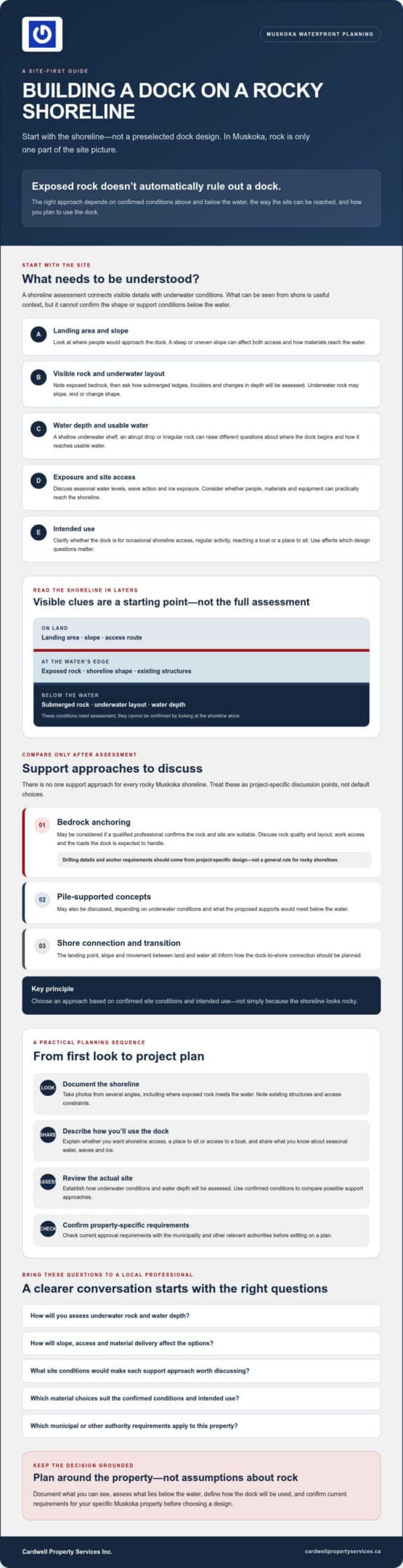
A Practical Planning Sequence for a Rocky Muskoka Dock Project
A measured planning sequence keeps decisions in the right order: clarify what the dock needs to do, understand the property, confirm applicable approvals, then settle the design. When building a dock on a rocky shoreline, assumptions about support or construction access can lead to changes if they haven’t been checked against the site.
- Define the use. Note who will use the dock and what it needs to accommodate, such as access to the water or a place to sit.
- Document the site. Gather photos and property information. Note existing structures, access limits and known shoreline constraints.
- Arrange an assessment. Have a qualified professional review the property and identify whether engineering or other specialist input is appropriate.
- Confirm approvals. Check current requirements with the relevant municipality and other authorities for your exact property before construction begins.
- Finalize the design. Coordinate the design with assessment findings, intended use, material selection and practical construction access.
What information should you prepare before requesting a project review?
Bring a clear description of the intended use and approximate dock location, along with photos, available property information and notes about existing structures. Flag access limitations and questions about exposed or submerged rock. This preparation gives a contractor a useful starting point, but photos can’t replace an on-site review.
How should approvals and design decisions be coordinated?
Ask which municipal and other applicable reviews may be needed, then confirm requirements directly with the authorities responsible for your property. Don’t use a neighbouring property’s past project as a guide. Requirements and site circumstances can differ. Design should progress alongside approval checks, with material choices and construction access considered in light of the site findings and intended use.
Qualified professionals can advise whether engineering or other specialist input is warranted for the conditions and proposed design. A local construction partner can also help coordinate site findings, material selection and project planning. For broader guidance on coordinating a Muskoka waterfront project, see this custom dock construction information. If you’re preparing to discuss a dock project, review custom dock construction services as a next step.
Choosing a Dock Builder for a Rocky Shoreline in Muskoka
Building a dock on a rocky shoreline calls for a builder who takes time to understand the property before recommending an approach. Look for clear explanations of what needs assessment, how design and materials will be considered, and how project updates will be shared. A useful first conversation addresses the shoreline’s specific constraints rather than starting with a one-size-fits-all solution.
What questions should you ask a prospective dock contractor?
Use the first discussion to understand how the contractor approaches the project. These questions can help:
- What site information or professional assessment is needed before recommending a construction approach?
- How will exposed rock, underwater conditions and water depth be considered?
- How might access for people, materials and construction affect the project?
- How will intended shoreline use inform the design and material choices?
- Who will help confirm applicable approvals, and how will those requirements be coordinated with the project?
- How will design decisions and project updates be communicated as more is learned about the site?
Look for a process that lets the assessment inform the design. A contractor should be able to explain what is known, what still needs checking and when specialist input may be appropriate. That clarity helps you understand the decisions ahead without treating an early conversation as a final design.
How can a local construction partner help you take the next step?
A Muskoka-based builder can bring local context to discussions about waterfront conditions, material selection and municipal requirements. Cardwell Property Services offers custom dock construction and repair for waterfront properties in Muskoka communities including Gravenhurst, Bracebridge, Huntsville, Dorset, Port Carling and Mactier. The next step is a discussion grounded in your property’s conditions and intended use, not a construction recommendation made before assessment.
Review the custom dock construction service to learn more about the relevant work. When you’re ready to share the site details and questions you’ve gathered, discuss your rocky-shoreline dock project.
Start with the Shoreline, Then Shape the Plan
Building a dock on a rocky shoreline is easier to plan when decisions start with the property. In Muskoka, exposed bedrock is only one part of the picture. Shoreline slope, underwater conditions, water depth, access and intended use all help determine which construction approaches are worth exploring.
A careful sequence keeps the project grounded: define how you’ll use the dock, document the site, arrange a professional assessment and confirm current approval requirements for your property. Design and material choices can then follow from what’s known, with qualified input where needed.
Cardwell Property Services offers custom dock construction and dock repair in the Muskoka region and nearby communities. A conversation about your shoreline, access and plans can be a sensible first step, without settling on a construction approach before the site has been assessed.
Discuss your rocky-shoreline dock project with Cardwell Property Services. A clear understanding of the property and a considered plan can help you move forward with care for your waterfront.
Frequently Asked Questions
Can you build a dock on a rocky shoreline?
Yes, a rocky shoreline doesn’t automatically rule out a dock. The suitable design depends on the property, including shoreline slope, underwater rock, water depth, access and intended use. When building a dock on a rocky shoreline in Muskoka, don’t assume visible bedrock tells the whole story. A site assessment can help establish what needs further review before a construction approach is selected.
How do you anchor a dock to bedrock?
Anchoring a dock to bedrock may be considered after a qualified professional confirms the rock and site can support a suitable design. Rock quality, shape and layout, access for the work, and the dock’s intended loads all need consideration. The anchoring method and installation details should be determined for the specific project, rather than borrowed from a general recommendation or another property.
What type of dock is best for a rocky shoreline?
There isn’t one dock type that’s best for every rocky shoreline. Depending on verified conditions, a property owner and qualified professionals might discuss a floating dock, pile-supported design, bedrock anchoring or another approach. Water depth, underwater ledges, exposure, access and intended use all affect the comparison. Treat these as options to assess, not recommendations, until the site and project requirements are understood.
Do I need approval to build a dock in Muskoka?
Approval requirements can vary by property and municipality, so confirm current requirements before construction begins. Ask the relevant municipality which local reviews may apply, and check whether other authorities need to be consulted for the proposed work. Don’t rely on a neighbour’s experience as confirmation for your project. A local construction partner can help identify questions to raise, but authorities should confirm requirements for your exact property.
What should I check before building a dock on a rocky shoreline?
Start by clarifying how you plan to use the dock and where it might sit. Record the shoreline slope, visible rock, existing structures and practical access for people and materials. Note questions about submerged ledges, boulders, water depth, seasonal water levels, waves and ice exposure for professional review. Photos and property details are useful preparation, but they don’t replace an on-site assessment.
Can a contractor assess whether my rocky shoreline can support a dock?
A dock contractor can review the property and help identify what needs assessment before recommending a construction approach. Some sites may call for engineering or other specialist input. A qualified professional can advise what’s appropriate. Cardwell Property Services offers custom dock construction and repair for waterfront properties in the region, including Gravenhurst, Bracebridge, Parry Sound, Huntsville, Dorset, Collingwood, Midland, Orillia, Haliburton, Port Carling, Mactier and Barrie.