
Boathouse Construction in Port Carling: A How-To Guide for Your Waterfront Legacy
A boathouse in Port Carling is more than just a place to park your boat; it is a permanent piece of your family’s Muskoka legacy that should stand for generations. When you decide to invest in boathouse construction Port Carling shoreline regulations and environmental factors quickly become the most important parts of the conversation. You likely feel a deep sense of responsibility to protect your property and the natural beauty of the lake, yet the thought of dealing with strict building codes or worrying about winter ice damage can be overwhelming.
We understand that you want a process that feels organized and a result that adds genuine value to your waterfront home. This guide will help you master the complexities of the build, from securing permits with the Township of Muskoka Lakes to integrating the right boat lift into your foundation. We will walk through the essential steps of planning and execution, giving you the clarity needed to create a functional, beautiful structure that honours the traditions of the Hub of the Lakes while looking firmly toward the future.
Key Takeaways
- Understand the specific permit requirements from the Township of Muskoka Lakes and the MNRF to ensure your waterfront project starts on solid legal ground.
- Explore why steel pile foundations are often the best choice for boathouse construction Port Carling residents rely on for long-term stability against winter ice.
- Learn how to match your boat lift’s capacity and power system to your specific vessel for effortless launching and storage.
- Discover which traditional materials, such as hemlock and cedar, will help your boathouse mature gracefully within the classic Muskoka landscape.
- Gain insight into how a professional approach to project management can turn a complex shoreline build into a stress-free experience.
Navigating Port Carling Boathouse Permits and Regulations
Building on the water in Port Carling isn’t as simple as picking a spot on the shore and starting to dig. It’s a careful dance between your vision and the strict rules meant to protect our beautiful lakes. When you begin boathouse construction Port Carling officials from both the Township of Muskoka Lakes and the District of Muskoka will be involved. The Township handles the specifics of your building’s size and height, while the District looks at broader environmental impacts and shoreline integrity.
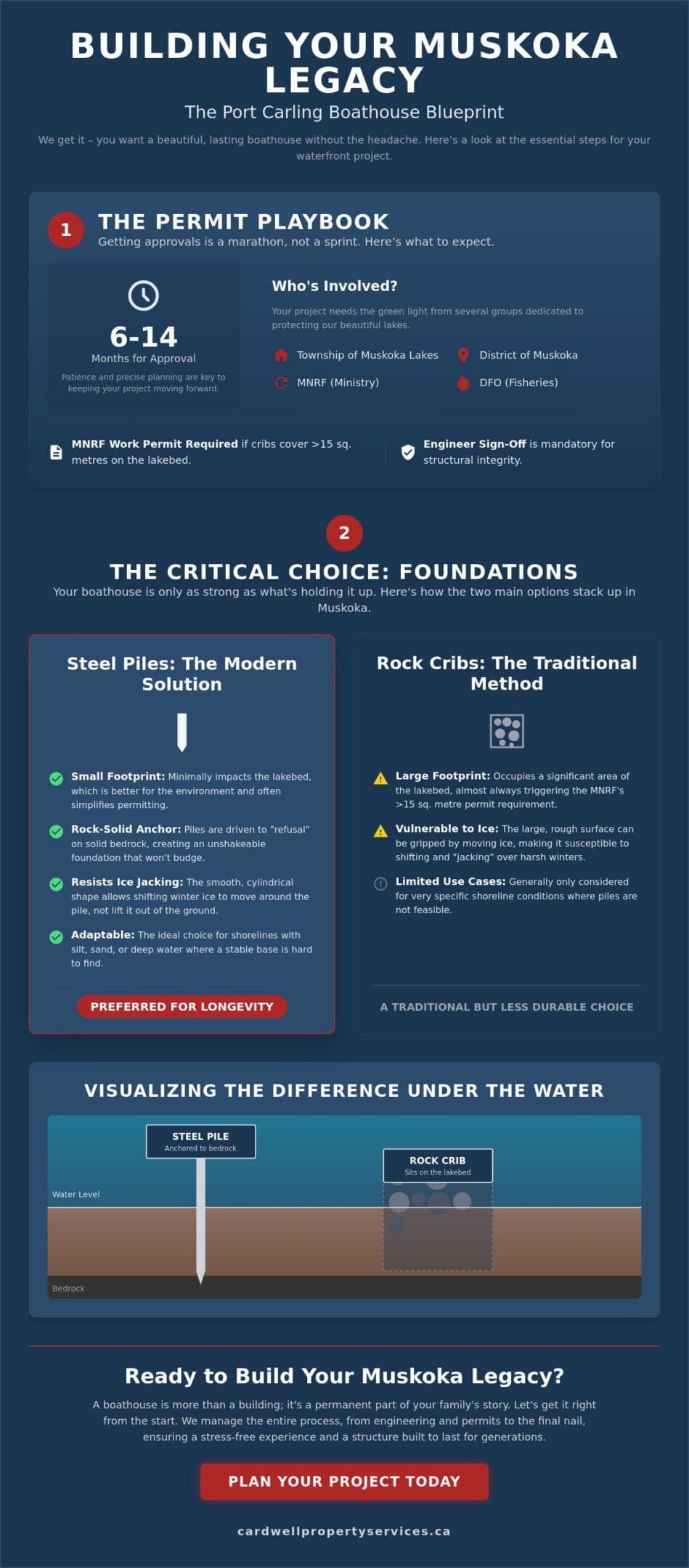
One of the biggest hurdles is understanding the Ministry of Natural Resources and Forestry (MNRF) rules. Since June 1, 2017, you’ve needed a work permit if your boathouse cribs cover more than 15 square metres on the lakebed. If you’re planning a larger structure, this is a mandatory step. You’ll also need to consider Fisheries and Oceans Canada (DFO). They want to ensure your project doesn’t harm local fish habitats or spawning grounds. These layers of protection keep our waters healthy; however, they do require patience and precise planning from the start.
The Pre-Construction Consultation
Before you even look at floor plans, you need a professional site survey. This is the only way to know exactly where your property lines sit and how the current shoreline structures measure up. Many older boathouses in Muskoka don’t meet modern codes. If you’re looking to replace an old structure, we have to determine if it’s “legal non-complying” or if we need to apply for a minor variance. A variance is essentially a special permission to deviate slightly from the standard zoning by-laws, like building a bit closer to the side lot line than usually allowed. Identifying these needs early prevents costly delays once the hammers start swinging.
Working with Local Authorities
Getting your permits in order is a marathon, not a sprint. In the Muskoka region, it’s common for the approval process to take anywhere from 6 to 14 months. This timeline includes reviews from the building department and often involves a site plan control agreement. This agreement is a contract between you and the Township that outlines exactly how the land will be developed and maintained to protect the shoreline buffer. To keep things moving, we ensure every application for boathouse construction is backed by engineered plans. Whether you’re using steel piles or traditional cribs, the Township requires a Professional Engineer to sign off on the structural integrity. This ensures your legacy remains safe for decades and survives the harsh Muskoka winters.
Selecting the Right Foundation: Steel Piles vs. Rock Cribs
Your foundation is the silent partner in your boathouse’s longevity. In Port Carling, the lakebed is rarely uniform. You might encounter solid Canadian Shield granite, shifting sand, or deep silt all within a few metres of your shoreline. This variety is exactly why we start every boathouse construction Port Carling project with a thorough assessment of what lies beneath the surface. Water levels in the Hub of the Lakes also fluctuate significantly between the winter and the spring freshet; this is the sudden rise in water levels caused by melting snow and heavy spring rains. Your foundation needs to be high enough to stay dry during these peaks, but deep enough to keep your boat lift functional when the water drops in August.
Modern engineering must also account for the immense power of moving ice. During a typical Muskoka winter, the ice doesn’t just sit still; it expands, contracts, and shifts with the wind. This movement can “jack” a foundation, which means the ice literally pulls the structure out of the lakebed if it isn’t anchored correctly. By adhering to the standards set out in the Public Lands Act, we ensure that your build is both legal and structurally sound enough to handle these seasonal pressures. If you aren’t sure what’s under your water, it helps to chat with our team at Cardwell Property Services Inc. to get a professional opinion on your shoreline.
The Case for Steel Piles
Steel piles have become the preferred choice for many modern boathouse construction Port Carling projects because they offer a “small footprint” solution. We drive these heavy-duty pipes through the silt until they hit “refusal,” which is the point where the pile hits solid rock and cannot be driven any further. This creates a rock-solid anchor that won’t budge. Unlike rock cribs that cover a large area of the lake floor, piles are slender. This allows water and nutrients to flow more naturally around the structure, which is a win for the local ecosystem. Because they are made of galvanized steel, they resist corrosion and provide a stable platform that doesn’t settle over time.
Restoring Heritage Rock Cribs
Restoring a historic rock crib is an art form that requires a deep respect for tradition. Traditional rock cribs consist of large timber boxes filled with heavy granite. While they’ve served our lakes for a century, they do require more maintenance as the wood eventually ages under the water. We often see older cribs that have begun to tilt or “belly out” as the internal stones shift. If the logs are still sound, we can often perform a “crib topper” replacement. This involves removing the top layers of old wood and replacing them with fresh, pressure-treated timber or hemlock. It’s a meticulous way to preserve the classic look of your property while ensuring the structure above stays perfectly level and secure for the next generation.
Boathouse Lift Installation: Engineering for Seamless Access
A boathouse is more than just a shelter; it is a specialized tool designed to protect one of your most significant investments. During boathouse construction Port Carling owners often find that the lift system is the most technical part of the entire build. It isn’t just about picking a model from a catalogue. You need to match the lift’s capacity to your boat’s “wet weight,” which includes a full tank of fuel, batteries, and all your gear. A heavy modern wake boat requires a much different structural setup than a vintage wooden launch. We integrate these systems directly into the structural frame of the boathouse to ensure the weight is distributed safely across the foundation piles we discussed earlier.
Proper engineering ensures that your boat stays high and dry, safe from the slapping of waves and the growth of algae. We also prioritize maintenance access. By designing the floor layout with hidden hatches, we make it easy to reach the mechanical parts for seasonal adjustments. This thoughtful planning means you won’t have to pull up floorboards just to grease a fitting or check a cable. If you’re also considering how this fits with your shoreline layout, our work on custom docks often happens alongside lift planning to ensure a smooth transition from the slip to the shore.
Choosing Your Lift System
There are three main types of lifts: hydraulic, electric, and manual. Hydraulic lifts use fluid pressure to move the boat, making them the quietest and smoothest option for a peaceful morning in Port Carling. Electric systems use a motorized winch and cable, while manual lifts are hand-cranked. For a high-end boathouse construction, we almost always recommend hydraulic systems with stainless steel hardware. Stainless steel is essential because it won’t rust in the humid, damp environment under your boathouse floor. You’ll also need to choose between an overhead lift, which hangs from the roof beams, or a bottom-standing lift that sits on the lakebed.
The Installation Process
- Step 1: Measuring for Depth. We start by measuring the slip width and the water depth at both the spring high-water mark and the late-summer low. The lift must have enough “travel” or vertical movement to keep the boat safe regardless of the season.
- Step 2: Securing the Frame. We secure the lift frame directly to the foundation piles or the main structural timbers. This creates a unified structure where the lift and the building work together to support the load.
- Step 3: Calibrating the Bunks. Finally, we adjust the “bunks,” which are the padded rails that the boat sits on. We realize a perfect fit by matching these rails to your boat’s specific hull shape, which prevents hull deformation and ensures the boat stays level every time you lift it.
Designing for the Muskoka Aesthetic: Materials that Mature
A well-designed boathouse should look like it has always been part of the shoreline. In Port Carling, the “Muskoka Aesthetic” is a blend of rugged durability and refined comfort. When we approach boathouse construction Port Carling property owners often ask how to balance beauty with the harsh realities of lakefront humidity. The air over the water is constantly damp, which means every material choice must be made with moisture resistance in mind. We favour locally sourced Muskoka granite for accents because it grounds the building to the Canadian Shield and handles the freeze-thaw cycle better than almost any other stone.
The choice of wood is equally vital. Western Red Cedar and Eastern Hemlock are the traditional workhorses of our region. Cedar is naturally resistant to rot and insects, making it perfect for siding and trim. Hemlock is incredibly strong and actually becomes harder when it stays wet, which is why it’s often used for the heavy structural timbers that sit just above the water line. Choosing a colour palette that mimics the surrounding forest, like deep charcoals, forest greens, or warm earth tones, ensures your boathouse complements the natural landscape rather than competing with it. This focus on aesthetic harmony is also evident in world-class waterfront destinations like the Edgewater Inn, where the architecture is designed to respect and enhance its scenic harbour location.
Exterior Finishes and Longevity
Realizing a weathered, “heritage” look doesn’t mean you have to sacrifice the integrity of your siding. Many clients prefer the classic look of board and batten siding, which allows the wood to expand and contract naturally with the seasons. We generally recommend high-quality semi-transparent stains over paint. Paint tends to trap moisture against the wood, leading to peeling and rot, whereas a proper stain penetrates the grain and allows the wood to breathe. For those who want the look of wood with less maintenance, modern composite materials have come a long way, offering the texture of cedar without the need for regular restaining.
Functional Luxury Features
Modern boathouses often serve as the primary social hub for the cottage. Designing upper-level decks is a great way to maximize sun exposure, especially on lots with heavy tree cover. We often integrate glass railing systems into our custom boathouse design to preserve those iconic lake views while you’re lounging upstairs. These features turn a simple storage building into a sophisticated waterfront lounge. If you’re ready to start planning a space that reflects your style and stands the test of time, get in touch with us to discuss your vision. We can help you select the right materials that will mature beautifully on your Port Carling property.
The Cardwell Approach to Boathouse Construction
Choosing a partner for your waterfront project is a decision that affects your property for decades. Our philosophy is rooted in quiet confidence and a deep respect for the traditions of the Muskoka shoreline. When we manage boathouse construction Port Carling families can rest easy knowing every detail is being handled by professionals who treat the project as their own. We don’t just build structures; we act as guardians of your property’s value and heritage. Just as you might discover Paterson Insurance Brokers for expert risk management on business assets, Cardwell Property Services Inc. oversees every phase from the initial design sketches to the final calibration of your boat lift with a methodical eye for detail.
We realize that building on the water involves high stakes. Our local Port Carling expertise means we aren’t just guessing about lakebed conditions or municipal preferences. We have spent years building a network of trusted local vendors and specialized engineers who understand the unique demands of the Muskoka climate. This collaborative approach ensures that your boathouse isn’t just beautiful on opening day, but remains a stable, functional part of your family’s history for years to come.
A Methodical Project Timeline
We don’t believe in rushed timelines that compromise quality. Our process is steady and deliberate, starting with a conversation about how you plan to use your space. We handle the meticulous details of permit management, navigating the 6 to 14-month approval window that is common in the Township of Muskoka Lakes. By managing these administrative hurdles for you, we ensure that the construction phase stays on track. Cardwell Property Services Inc. prioritizes high-quality progress, taking the time to ensure foundations are driven to refusal and timbers are joined with precision. This patience pays off when you see a finished product that stands perfectly level against the shifting Muskoka ice.
Your Partner on the Water
Our commitment to your property extends beyond the boathouse itself. We view ourselves as your long-term partner on the water, dedicated to maintaining the structural integrity of everything we build. Whether we are restoring a heritage crib or starting a fresh build on steel piles, our focus is always on longevity. You can explore our full range of construction services to see how we provide total care for your waterfront home, from custom decks to complete renovations. We take pride in our work because we know we are building the backdrop for your family’s most cherished memories. Ready to build? Contact Cardwell Property Services Inc. for a consultation and let’s start planning your waterfront legacy together.
Securing Your Waterfront Future
Building a boathouse is a significant journey that requires a balance of technical precision and artistic vision. By now, you understand that successful boathouse construction Port Carling depends on navigating complex permit approvals and selecting a foundation that can withstand the immense pressure of Muskoka’s winter ice. Whether you choose the modern stability of steel piles or the timeless look of a rock crib, the goal is always to create a structure that matures gracefully alongside the lake.
We take pride in being a steady hand throughout this process. With decades of Muskoka waterfront experience and specialized steel pile installation equipment, we have the tools to handle even the most challenging shoreline conditions. Cardwell Property Services Inc. acts as your trusted partner for complex permit approvals, ensuring every detail is managed with care and integrity. Your boathouse is more than a building; it’s a legacy for your family to enjoy for generations to come. Start your Port Carling boathouse project with a trusted local expert today and take the first step toward a beautiful, worry-free waterfront.
Frequently Asked Questions
Do I need a permit for a boathouse in Port Carling?
Yes, you definitely need a building permit from the Township of Muskoka Lakes for any boathouse construction Port Carling project. You also need a permit from the Ministry of Natural Resources and Forestry if your structure’s cribs cover more than 15 square metres of the lakebed. These rules ensure that all waterfront builds are safe for the owner and protect the delicate shoreline environment for everyone.
How much does boathouse construction cost in Muskoka?
The total investment for a boathouse varies widely based on the size, the number of slips, and the complexity of your shoreline. Factors like whether you choose a steel pile foundation or traditional rock cribs will influence the final budget significantly. Since every lot has unique water depth and soil conditions, we recommend a site-specific consultation to understand the structural requirements for your particular property.
Can I build a two-story boathouse with living quarters?
Yes, two-story boathouses with sleeping cabins are permitted in many parts of the region, but they are subject to very specific zoning by-laws. These rules often limit the total height of the building and the maximum floor area allowed for the living space upstairs. It’s important to check your specific property’s zoning and the latest Township regulations to see if a second storey is a viable option for your lot.
What is the best foundation for a boathouse on Lake Muskoka?
Steel piles are currently considered the gold standard for Lake Muskoka because they are driven deep into the lakebed until they hit solid rock. This method provides incredible stability and resists the jacking effect of winter ice better than other foundations. While traditional rock cribs are still used for their classic look, steel piles offer a smaller environmental footprint and a much longer lifespan for modern waterfront structures.
How long does it take to build a custom boathouse?
Most custom boathouse construction Port Carling projects take between 12 and 18 months from the first design meeting to the final walkthrough. This timeline includes the 6 to 14 months typically required to secure all necessary permits from the Township and provincial authorities. The actual construction phase usually moves faster, but we prioritize a steady pace to ensure every joint and lift calibration is handled with precision.
What type of boat lift is best for my boathouse?
Hydraulic lifts are the top choice for boathouse owners who want quiet, smooth, and reliable operation. They use fluid pressure instead of noisy cables, which makes for a more peaceful morning on the dock. When you are selecting a lift, you must match the capacity to your boat’s wet weight, which includes fuel and gear, to ensure the system operates safely without unnecessary strain on the frame.
How do I protect my boathouse from winter ice damage?
The most effective way to prevent ice damage is to use an engineered foundation like steel piles driven to refusal. You can also use bubblers or de-icing systems that move warmer water from the bottom of the lake to the surface. This prevents thick ice from forming directly against your foundation timbers and cribs, protecting the entire structure from the immense pressure of moving ice sheets during the spring melt.
Does a boathouse increase my property taxes in Ontario?
Yes, adding a boathouse to your property will likely increase your property taxes because it adds significant value to your estate. The Municipal Property Assessment Corporation, or MPAC, assesses the value of all structures on your lot, including docks and boathouses. A well-built boathouse is a major asset that increases the resale value and adds long-term worth to your waterfront legacy in the Muskoka region.